
Diesel Technic: looking beyond the MOT for brake testing
 Diesel Technic has outlined its perspective on why fleet operators should look beyond the MOT when it comes to brake testing.
A brake test result can tell an operator far more than whether a truck or trailer has passed or failed on the day, says the company. Used properly, it can be an early warning that something in the braking system is starting to drift long before it turns into downtime, a repeat defect or a more serious roadworthiness issue.
According to Diesel Technic’s Parts Specialists, brake testing deserves to be seen as more than a compliance check, giving operators a valuable opportunity to pick up deeper braking issues before they escalate into cost, downtime or repeat workshop visits. The firm says this practical advice is backed by its DT Spare Parts range, which includes brake calipers, brake cylinders and related repair solutions for a wide range of commercial vehicle applications.
“Brake testing does not begin and end with annual tests,” said Diesel Technic.
“Operators are expected to keep a much closer eye on brake performance across the year, and that is what makes every result worth paying attention to. A poor or uneven reading is not simply a workshop problem to clear before the vehicle goes back out. It can be an early sign that something more fundamental is developing in the braking system, and that the real cost will come later if the root cause is missed.”
When a result is off, it may be pointing to more than routine wear. According to Diesel Technic’s Parts Specialists, it could be highlighting a caliper piston starting to stick, uneven pad wear linked to wear on the brake carrier, a brake cylinder issue affecting braking or holding performance, internal leaks or damaged sleeves, or settings that have not been checked properly after parts have been replaced.
“Those are the kinds of faults that can keep coming back if only the symptom is dealt with, rather than the cause,” said the firm.
“It is easy to assume that an unsatisfactory brake result comes down to routine wear. Sometimes it does. But not always.”
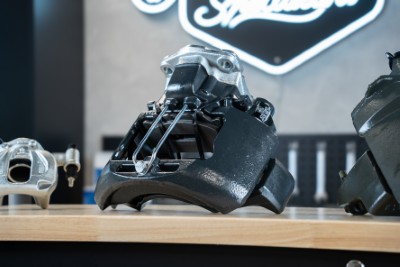 Diesel Technic points to two component areas that can have a major influence on braking performance and consistency: brake calipers and brake cylinders.
“Neither tends to grab much attention until something goes wrong, but both can have a direct effect on how braking effort is applied, balanced and maintained in service. Both product groups are covered within the DT Spare Parts range, alongside matching repair solutions designed for major commercial vehicle marques.
“Brake calipers sit right at the sharp end of the system. Their job is to apply the pads evenly to the disc and release correctly, every time. When that stops happening, the signs can show up quickly in brake test results.”
Diesel Technic highlights stiff pistons on one side as a common fault pattern in practice, especially on axles that see less frequent use, such as trailing axles.
“Worn supporting surfaces on the brake carrier can also lead to uneven pad wear. For an operator, those issues may first appear not as a dramatic failure, but as imbalance, inconsistency or a result that simply does not look right.
“That is the point at which a brake test becomes commercially valuable. Catch the issue early and it may be sorted before it leads to accelerated wear, reduced braking efficiency or another return trip to the workshop for the same fault.”
Brake cylinders play an equally important role, says the firm, not least because they combine two functions in one part: the service brake and the parking brake.
“That means any issue here can affect not only braking performance on the move, but also how securely a vehicle holds when stationary.
“Typical trouble spots include incorrect pipe connections, damaged sleeves that allow water ingress, internal leaks and settings that have not been checked properly after replacement. None of this is especially glamorous, but all of it can affect braking reliability and all of it matters when a truck or trailer is expected to work hard, day in, day out.
“This is where brake testing becomes a business issue, not just a technical one. A result that picks up a developing fault early gives operators the chance to deal with the cause before it turns into repeat defects, unplanned downtime or a more disruptive repair. In a busy fleet operation, every extra workshop visit, delayed job or vehicle taken out of service carries a cost.
“Brake testing may not be the most glamorous part of fleet maintenance, but it can be one of the most useful. Combined with the right technical follow-up and quality replacement components, including products from the DT Spare Parts range, it can help operators tackle faults earlier and keep vehicles working as they should.”