
Totalkare: which brake tester is best for your workshop?
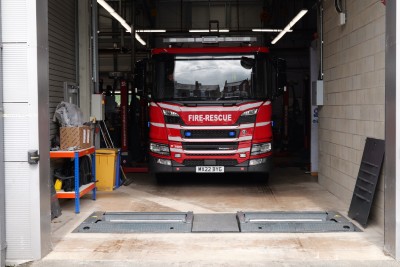 Workshop equipment provider Totalkare has outlined its perspective on which applications are most appropriate for the most common types of brake testing equipment.
“Every vehicle workshop needs some kind of brake testing equipment, but not all brake testing systems are created equal,” said Totalkare.
“If you’re serious about brake testing – or you’re looking ahead to MOTs – you need to understand your options.”
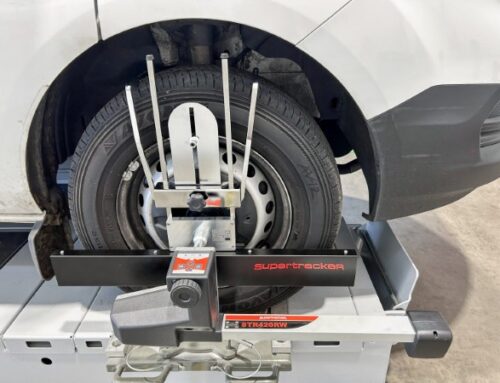
A decelerometer is a basic type of brake testing equipment, says Totalkare, and is only allowed by DVSA in specific circumstances.
“A decelerometer works by measuring the slowing of the vehicle itself: its actual deceleration. That means a brake test involves real driving and real braking…
“It’s a measure of the deceleration of the vehicle as a whole, which means you’re missing out on braking results for each axle separately, any imbalance between the left and right sides [and] controlled and repeatable testing conditions.”
Among suitable uses for decelerometers are vehicles where a roller brake test isn’t possible, advises Totalkare, as well as backup tests if your main brake tester isn’t working, and quick ‘field tests’ on smaller vehicles.
“There are some situations where a decelerometer might be necessary, such as vehicles with a weight that’s too high for a brake tester, vehicles with an unusual shape or design that won’t fit a brake tester, [and] some hybrid or EVs with a parking brake that can’t be disengaged for a static brake test.”
Meanwhile, roller brake testers enable in-depth analysis (each axle, each side), consistent and repeatable conditions, and accurate and reliable MOT results, says Totalkare.
“There’s a reason why the DVSA recommends roller brake testers as the gold standard for brake testing systems. They’re the most accurate and reliable – with the most consistent and repeatable test conditions.”
Rather than measuring a vehicle’s braking as it moves, a roller brake tester simulates movement by turning the wheels while the vehicle is in a static position, the firm continues.
“That means you can repeat multiple tests without worrying about variations in driver behaviour, the speed of the vehicle, dirt or moisture on the road or tyres.
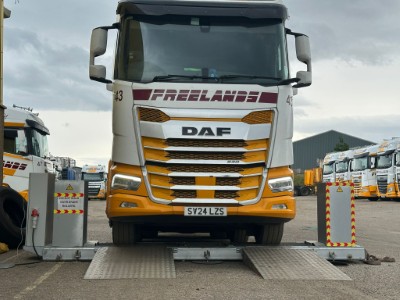 “On top of that, you can also get specific data on different parts of the vehicle – testing each axle or wheel separately, as well as testing your parking or emergency brakes.
“Compared to a decelerometer (which are usually portable and low-cost), a roller brake tester does come with more of a commitment: it’s often a more costly investment, and the installation of an in-ground brake tester will come with some structural work (as opposed to a mobile brake tester, which doesn’t need the same level of installation). But for any workshop that needs a high level of accuracy and specific data in its brake testing, a roller brake tester is almost always the best choice.”
Finally, says Totalkare, plate brake testers are suitable for faster routine checks, lower maintenance and repair needs, and are more portable than an in-ground brake tester.
“Plate brake testers sit somewhere in between a decelerometer and a roller brake tester,” said the company.
“By driving a short distance (at a slow speed) over the length of the plate brake tester’s surface, the tester uses pressure-sensitive plates to measure the forces from each wheel as the vehicle brakes.
“Like a decelerometer, the test involves a moving vehicle, and measures the real-world action of a driver braking over a short distance.
“But like a roller brake tester, you’re measuring more than just the total deceleration of the vehicle. A plate brake tester can also give you accurate data about separate wheels and sides of the vehicle…
“Because a plate brake tester works with a moving vehicle, the test results are vulnerable to inconsistent conditions – like moisture or dirt on the surface or the tyres. It does, however, come with fewer moving parts than a roller brake tester, which can mean fewer repairs and simpler maintenance in the long run.”