
Report sets out next steps for autonomous HGV rollout
 eFreight Autonomous, the consortium of commercial vehicle and automotive technology experts led by Voltempo, has unveiled findings of its nine-month-long study into autonomous HGVs.
The report, Early-stage autonomous vehicle opportunities within UK heavy road freight, identifies hub-to-hub trunking between logistics centres via motorways and A-roads, and short intermodal shuttle operations linking ports, railheads and distribution hubs, as the most viable starting points for early deployment of autonomous trucks in the UK.
The consortium’s view is that these types of operations would provide the clearest commercial and operational pathway, due to their predictable routes, “manageable interfaces with other road users and sites”, and the ability to measure productivity, utilisation, safety and emissions benefits.
“More complex environments such as dense urban delivery with frequent interactions, kerbside constraints and vulnerable road users are likely to follow later as systems, standards and public confidence mature,” said the report.
The study suggests that internationally, autonomous freight is moving rapidly from pilot projects towards early commercial operation, while the UK approaches a legislative milestone in the form of the implementation of the Automated Vehicles Act 2024.
The eFreight Autonomous consortium is led by Voltempo alongside Connected Places Catapult and Berkeley Coachworks. It secured funding in 2025 through the UK government-backed CAM Pathfinder Feasibility Studies competition, which was delivered by Innovate UK and Zenzic.
Since its launch last year, the project has conducted workshops, seminars and customer visits with freight operators, and engaged with every major European truck manufacturer, as well as government departments and trade groups.
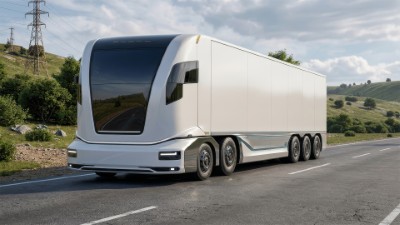
 As part of the programme, the partners have been working on concepts for a new category of autonomous HGV, including lightweight ‘smart trailer’ configurations which could deliver a 15 per cent payload increase, while reducing overall vehicle weight by approximately 10 per cent.
According to the consortium, these concepts could remove more than 22,000 heavy vehicles from UK roads, while reducing fleet operating costs by up to 37 per cent.
“UK HGV Construction and Use legislation will need to be considered as new types of HGVs become possible due to autonomy,” said the report.
“Without a cab, fully autonomous HGVs may be very different to the vehicles of today. A typical HGV cab weighs approximately two tonnes and takes a significant amount of space. Whilst an autonomous articulated tractor unit could be built within existing construction and use legislation, the ‘smart trailer’ concept, based around a self-powered trailer that would replace many articulated HGVs does require changes to legislation.
“Specifically, a five-axle rigid HGV with a 42-tonne gross vehicle weight and a 15.6 metre overall length would create significant advantages for autonomous HGVs over today’s vehicles, whilst being lighter than today’s articulated HGVs. This specification of vehicle is already available in some other parts of Europe.“
Compared to today’s artics, says the report, an ‘autonomous smart trailer’ would be 1.1 metres shorter, and offer a 7 per cent increased weight payload and 15 per cent greater volumetric payload. Gross vehicle weight would be 2 tonnes lighter, and average on-road weight would be 3 tonnes lighter. Average payload would increase from 16 tonnes to 18.4 tonnes.
“As a driven vehicle, this configuration of HGV has an immediate benefit for the construction sector that currently uses 32 tonne rigid HGVs, providing a 50 per cent uplift in payload over their current vehicles,” the report added.
The report identifies a range of near-term actions for government to take in order to convert the legislative framework into a workable deployment pathway for autonomous HGVs, including through the facilitation of structured trials, the coordination of infrastructure readiness, and setting expectations for cybersecurity and resilience, “recognising the operational dependence on software, connectivity and remote services”.
It suggests that industry should form trial consortia bringing together fleet operators, shippers, truck manufacturers, technology providers, infrastructure owners and insurers.

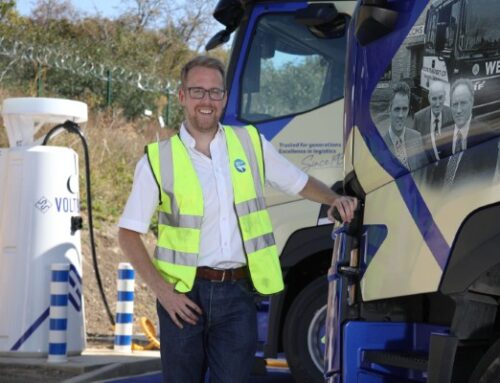
Voltempo’s Michael Boxwell
Efforts should focus on designing end-to-end operational processes “rather than treating autonomy as a vehicle-only upgrade”; aligning autonomy with decarbonisation aims “particularly where higher utilisation can improve the economics of zero emission HGVs and optimise charging strategies”; and investing in workforce transition by creating new roles in areas such as remote operations, fleet monitoring and safety assurance.
The consortium says the next phase of the programme will focus on supporting UK autonomous freight trials from next year onwards, while it continues to engage with operators, government and truck makers.
Michael Boxwell, corporate development officer at Voltempo, said: “Over the past nine months, we’ve focused on understanding where autonomous freight can deliver genuine operational value for UK fleets and what conditions are needed to make deployment practical.
“What’s become clear is that this is no longer a future concept. The technology, legislation and commercial interest are all moving forward quickly, and with continued grant funding available to support trials, the UK is ideally positioned to take advantage and lead from the front.”