
BM adds value with brake tester loading systems
 Roller brake tester manufacturer BM has outlined the development history and features of its load simulation systems.
The company highlights DVSA’s requirements for carrying out at least four brake tests per year, and the expectation that they should be loaded to at least 65 per cent of their maximum gross weight during testing, ensuring brake performance is assessed under realistic operating conditions.
BM has more than 44 years of experience in designing and manufacturing load simulation systems. In 1982, the company developed the BM17200 lifting roller brake tester.
“This model has been continuously improved and remains in production today, mainly for markets using the Air Pressure Extrapolation test method,” said BM.
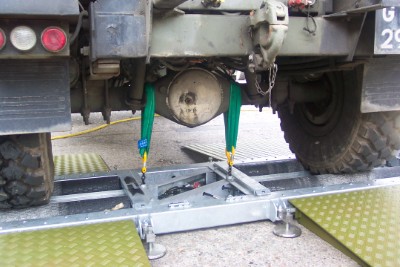
In 1993, the firm introduced a chassis loading system for brake testers installed over service pits.
“This versatile system can load almost any vehicle. When New Zealand moved to loaded brake testing in 2008, the CLS was installed at most test stations across the country. Its modular design supports loads of up to 60,000 kg, while a 20,000 kg version is commonly used in the UK.”
In 2005, BM developed the BM74000, a new push-down system for the DVSA to replace the ageing ‘nodding donkey’ units in its vehicle test halls. The BM74000 can be retrofitted to any brand of in-floor brake tester, and its integrated load feedback system enables the ECU to apply and maintain loads of up to 10,000 kg.
In 2016, BM launched the BM18200, a vertical-lift brake tester capable of applying up to 16,000 kg of load at a height of 255 mm. It can be installed either in-ground or over a pit. For chassis loading, its skate-based restraint system means the restraining strap only needs to be attached once during the test.
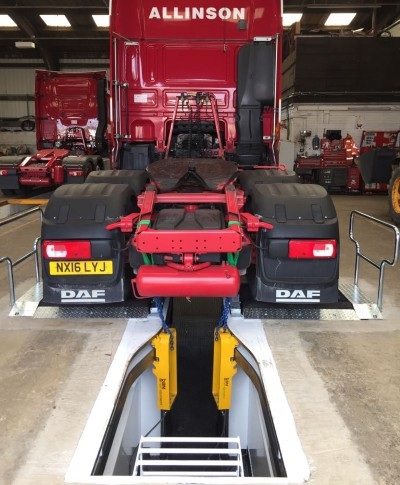
BM14200 with CLS type A and Everquip Steel Pit
“All BM loading systems use a smart ECU that maintains the required load, even if the vehicle’s air suspension pressure changes,” said the company.
“This helps prevent overloading of the axle or chassis.
“The BM CLS and BM18200 systems retrieve the vehicle’s maximum axle load from the DTP database, calculate the 65 per cent minimum requirement, and automatically apply the required axle load. Manual input is also available if a different load is needed.”
BM Braketester software includes several features that make vehicle test records easier to manage, adds the company.
“On internet-connected PCs, it can email PDF copies to fleet managers and apply digital signatures to printouts through the operator’s password-protected login. This allows test records to be added quickly and easily to the vehicle folder in the company’s fleet management system.
“BM software can automatically update the DVSA DTP number database as soon as new releases become available; the software checks for the update when the program opens on internet-connected machines.
“These features are already included in BM Braketester software. To have them enabled, please contact an official BM UK agent.”
A list of official BM sales and service agents is available on the BM website.