
Lloyd Morgan Group issues IRTEC renewal advice
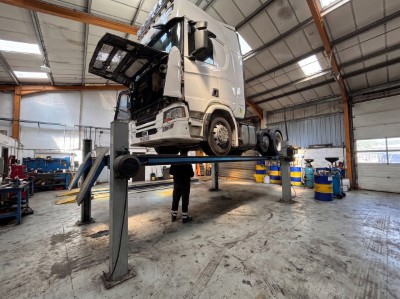 Transport compliance specialist Lloyd Morgan Group has offered guidance on renewal procedure for the IRTEC technician accreditation scheme, stating that relying on a system that assumes one renewal date for each technician is no longer sufficient.
“Most workshops manage IRTEC renewals the same way: one date per technician, five years out from their last assessment, logged and revisited when it gets close,” said the company.
“That approach has covered the majority of cases for a long time. It no longer covers everyone on the books.”
Two changes this year mean the old single-date habit needs retiring, says Lloyd Morgan Group.
“The first is straightforward: from 31 January 2026, IRTEC’s Inspection Technician routes moved to updated assessment materials. Vehicle naming has been modernised to HGV, MGV and PSV, the documentation has been simplified, and technicians now sit a 40-question open-book knowledge test with a 70 per cent pass mark, weighted towards legislation and roadworthiness. Any technician assessed from that date onwards sits this version, regardless of what their workshop trained against last time round.
“The second change is the one that catches more workshops out, and it has nothing to do with January. Not every IRTEC accreditation runs on a five-year cycle. The Large Electric Vehicle (LEV) Isolation and Reinstatement accreditation, which covers high-voltage work on electric HGVs, buses and coaches, renews every three years. A workshop tracking everyone against a single five-year marker will, sooner or later, find a technician carrying out high-voltage EV work on an accreditation that lapsed some time earlier without anyone noticing.
“That gap matters more now than it used to. EV fleets are growing across HGV and PSV operations, and the technicians qualified to isolate and work safely on high-voltage systems are still a relatively small pool. As that pool grows, so does the number of three-year clocks running quietly alongside everyone else’s five-year ones. The risk is rarely a technician forgetting their own renewal date. It is more often a workshop manager assuming one renewal system covers the whole team, when in practice it covers most of it.”
The practical fix is not complicated, the company advises, but it does need treating as a distinct task rather than being folded into general renewal admin.
 “Workshops should confirm which IRTEC route each technician holds and the exact expiry date attached to it, rather than relying on a generic five-year assumption. Anyone holding LEV accreditation needs that tracked separately, against its own three-year cycle, ideally flagged in a different colour or column to whatever system the workshop already uses. New assessments being booked now should be confirmed against the post-January materials, since centres using older formats will need to update.
“And as ever, six to eight weeks of lead time before any renewal deadline gives both the centre-based knowledge test and the practical assessment room to be scheduled without a last-minute scramble.
“None of this is academic. DVSA uses IRTEC to accredit its own vehicle inspectors, and traffic commissioners take IRTEC accreditation into account when assessing operator competence at public inquiry. A lapsed licence, even briefly, weakens that evidence trail at precisely the moment an operator might need it most. Technicians have been known to turn up to work on a licence that expired months earlier, simply because nobody had checked the LEV date sat outside the main renewal cycle. It is rarely deliberate. It is almost always a tracking gap.
“Workshop managers who want a quick health check should ask two questions this month. First, does every technician’s IRTEC expiry date sit somewhere visible and current, broken down by route rather than assumed as a single figure? Second, if any technician holds LEV accreditation, is that date tracked on its own line, against its own three-year cycle, rather than absorbed into the standard renewal list? If either answer is uncertain, that uncertainty is worth resolving before an audit or a traffic commissioner asks the question first.”