
Fuel storage advice from Smiths of the Forest of Dean
 Fuel tank and drum specialist Smiths of the Forest of Dean has emphasised the importance of managing on-site fuel in a way that reduces the risk of leaks, and therefore ground or waterway pollution.
The company cites regulations which can apply to above-ground storage in England where a business has an oil storage container that holds 201 litres or more, and cover products such as diesel, petrol, kerosene, HVO, lubricating oils, synthetic oils and some food oils.
“Compliance is not simply a matter of buying a tank,” advised Smiths.
“One of the most common weaknesses in fuel storage management is treating the tank as the only item that matters. In reality, leaks can arise from any part of the installation.
“Fill points, delivery lines, vent pipes, feed lines, valves, gauges, couplings, hoses and dispensing equipment all need to be suitable, secure and properly maintained.
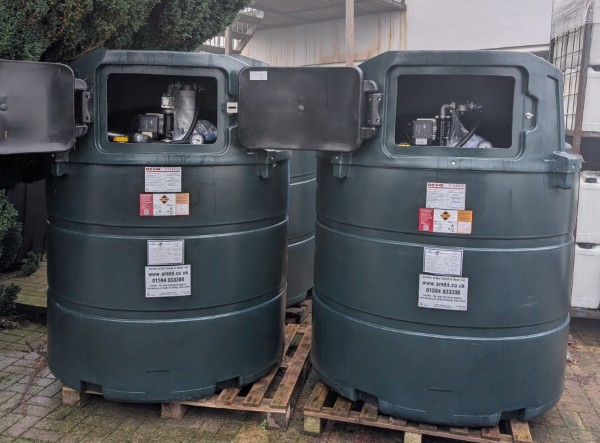
“Secondary containment is a key requirement because it provides a second line of defence if oil escapes from the primary container. Using a bunded tank that has complete containment built into its design such as a fuel station is the best way to store oil or fuel in an all in one legally compliant tank.
“These have the pumps, connectors, inlets with overfill cut off and dispensing pipework stored within a closeable, lockable bund preventing any spillages from any of the components.”
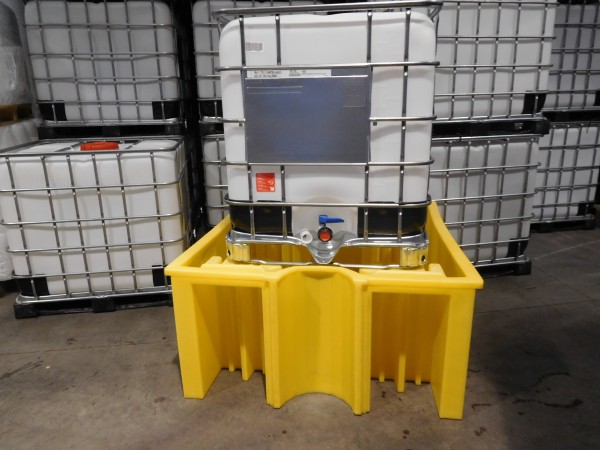
Other options include using IBCs, says Smiths. It advises that IBCs should not be used to store fuels for indefinite periods of time, but are well equipped for short term use and transporting.
“Plastic bunds should be used in conjunction with IBCs that are storing fuels, oils or chemicals in one place. These also give height to the IBC allowing for better flow when using gravity dispensing kits.
“The containment bund must have enough capacity for the potential loss. A single tank normally needs containment equal to at least 110 per cent of its capacity. Where several containers are stored together, the bund must be sized by reference to the greater of 110 percent of the largest container or 25 per cent of the total quantity stored.”
If storing fuels in smaller volumes such as barrels/drums. 1, 2 and 4-drum bunds are available, says Smiths.
 “These are sized to meet the legal 25 per cent capture requirements and made from the correct spec materials to hold the spillage.
“Smaller drip trays are also available if storing in jerry cans or smaller containers. These can be used to catch any spillages during filling or fuelling.”
Smiths continued: “Having the correct capacity for the volume you are storing is not the only thing you need to think about when it comes to bunds and drip trays. A bund must also be structurally sound, impermeable to oils and fuels and arranged on a flat surface so that spilled fuel cannot escape through drains, outlets, gaps or over the top.
“Our tested IBC, drum bunds and drip trays do this perfectly as they are sealed units with no drainage or outlets that could potentially leak.
“Where a tank is placed can significantly affect the likelihood and consequences of a spill. Tanks should be sited away from drains, watercourses, uneven ground, buildings in case of ignition and areas where vehicles could strike them. Delivery routes, tanker access and turning areas should be considered before placing the tank.
“If a tank cannot be positioned away from traffic or operating areas, physical protection should be provided. Bollards, barriers or other impact protection can help prevent damage from forklifts and delivery vehicles.”
Fuel transfer is one of the highest-risk activities in the storage process, says the firm: spills often happen during filling, and if the tank level cannot be monitored directly during delivery, automatic overfill protection is usually needed.
“This may include an alarm, fixed probe or automatic shut-off system. Again, the fuel stations come into their own with this as they have an automatic cut off system that stops them being overfilled, lowering risk of spillages and saving money.”
The way fuel is drawn from the tank can be just as important as the way it is stored and filled, adds Smiths.
“Hoses, pumps, nozzles and outlets should be arranged so that leaks or drips are contained. A permanently attached flexible dispensing pipe should either be kept inside the bund or stored in a secure cabinet with suitable spill containment.
“As the fuel tanks have a full cover and the pumps and pipes are stored inside this, it reduces the chance of drips and dribbles contaminating the ground.
“The gravity fed pipes on the IBC systems can be left inside the IBC bund for the same effect.”