
ZF: how software-defined CVs can transform yard operations
 As transport operators face ongoing pressure to improve efficiency, reduce turnaround times and manage increasing labour shortages, the digitalisation of yard processes is becoming an important area of innovation, says ZF.
The company highlights the seamless interaction between commercial vehicles and logistics infrastructure as one emerging approach. At its recent Commercial Vehicle Technology Day, ZF demonstrated how software-defined commercial vehicle (SdCV) technologies can help reshape yard operations through intelligent Vehicle-to-Infrastructure (V2I) connectivity. Based on service-oriented architecture (SOA), middleware and standardised vehicle APIs, the demonstration showed how commercial vehicles can securely exchange information and commands with external systems, creating a new level of operational integration.
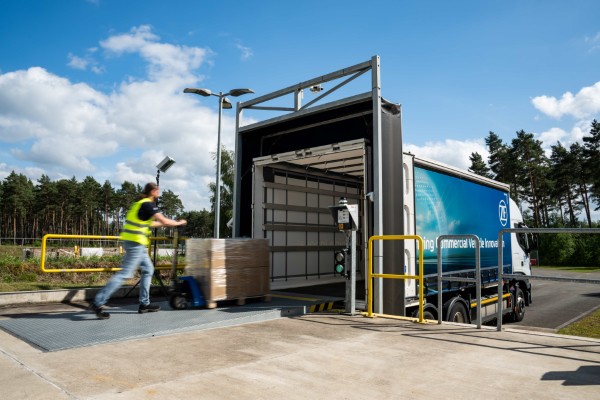
Building on this foundation, ZF showcased its SdCV Driver Terminal proof of concept. When the vehicle enters the yard, it automatically connects to the surrounding infrastructure and activates relevant functions, enabling fast and flexible deployment. During loading operations, sensor- and camera-supported docking improves positioning accuracy and safety in confined spaces. Vehicle functions such as the parking brake can interact directly with yard infrastructure and yard operators, while features including a digital wheel chock and Bluetooth-based safety stop mechanism help safeguard loading and manoeuvring processes. Together, says ZF, these capabilities demonstrate how software-defined vehicle technologies can improve loading safety, streamline yard workflows and enhance operational efficiency.
“Yard environments are among the most complex operational areas in commercial transport,” said the company.
“Vehicles, forklifts and pedestrians often operate in confined spaces with limited visibility and high traffic density. Manual safety procedures, while essential, can introduce delays and potential human error. By connecting vehicle systems directly with yard infrastructure, critical processes can be verified digitally, reducing unnecessary manual intervention while enhancing safety.
“Beyond safety, connected load-handling processes can help reduce vehicle dwell times and improve logistics efficiency. Faster vehicle processing, fewer operational interruptions and greater process transparency contribute directly to fleet productivity and total cost of ownership. For operators managing large distribution centers, logistics hubs or industrial sites, even small improvements in turnaround times can deliver meaningful operational benefits.”