
RHA ‘welcomes debate’ as Tories pledge to scrap diesel HGV phase-out dates
 The Road Haulage Association (RHA) has said it welcomes the debate that will be generated in the wake of a pledge by the Conservative Party to abandon the current planned UK phase-out dates for diesel HGVs, of 2035 for trucks up to 26 tonnes and 2040 for heavier vehicles.
The Conservatives lambasted the government for “blinkered eco zealotry” and called the existing policy “ideological”, adding that scrapping “Labour’s arbitrary phase-out dates” – which were in fact introduced in 2021 by the Tories themselves when in government – could save £877 million for taxpayers and help to tackle inflation. The move forms part of a broader attack by the party under leader Kemi Badenoch on purportedly excessive net zero policies.
The Tories also ruled out introducing potential measures currently being explored by government to mandate manufacturer targets for zero-emission trucks, similar to existing arrangements for vans and cars, and to require fleets to purchase defined numbers of them.
The Conservatives said their proposed changes were backed by industry, citing a 2025 Logistics UK survey that found 79.3 per cent of respondents concerned an HGV mandate could have major negative impacts on their business.
Announcing the policy, the shadow transport secretary Richard Holden said: “Everyone wants to see emissions from Britain’s transport fleet reduced. But this should not come at the cost of an almost 19 per cent increase in the cost of transporting food and produce around the UK, hitting hard-pressed families in the pocket and hammering haulage businesses.
“Britain’s hauliers keep our shelves stocked and our economy moving. Just as drivers should be able to choose the car that works for them, businesses should be able to choose the truck that works for them.”
In response to the announcement, the Department for Transport accused the Conservatives of having “wilfully misrepresented” statistics, and said it was determined to support the HGV sector as it made the switch to electric vehicles.
“Industry is already on board, rolling out thousands of these vehicles across the country,” said a spokesperson.
“We’re investing £1 billion to help businesses roll out clean trucks and vans and install depot chargers, building resilience against fuel price uncertainty.”
But Richard Smith, managing director of the Road Haulage Association (RHA), said that the Tories’ announcement put the challenges of decarbonising commercial vehicles “firmly in the spotlight”.
“We welcome the debate this announcement will generate,” he said. “Reducing emissions from HGV, coach and van fleets is one of the defining technical and economic challenges facing our industry. Operators work on extremely tight margins, and maintaining the reliability, range, payload and flexibility currently delivered by diesel vehicles will require substantial investment and coordinated action across government, industry and the energy sector.
“With HGVs accounting for 17 per cent of domestic transport emissions, the RHA remains firmly committed to reducing the sector’s carbon emissions, but the transition must be practical, affordable and commercially viable for HGV, coach and van operators.
“We need a clear, long-term roadmap that creates the right enabling conditions and supports a multi-energy future, embracing electrification, sustainable biofuels, other low-carbon fuels and hydrogen according to operational need.
“We will continue to work constructively with the government, opposition parties and our industry partners to develop a credible pathway that reduces emissions while protecting the businesses and supply chains on which the UK economy depends.”
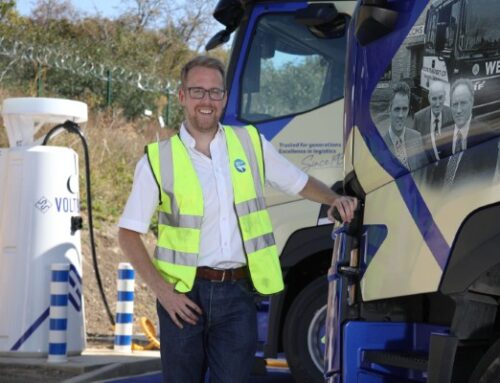
Simon Smith, CEO of electrification specialist Voltempo which leads the eFreight 2030 consortium, said: “The economics of electric HGVs are already becoming more compelling. They can deliver lower and more predictable operating costs, drivers prefer them and they offer important safety benefits. Hauliers aren’t asking government for more money – they need consistent policy and the confidence to make long-term investments in vehicles, charging and infrastructure.
“That certainty will accelerate private investment and help build stronger, more profitable haulage businesses, while reducing their exposure to volatile global oil prices. That’s good for UK growth, good for hauliers and, ultimately, good for consumers through more stable costs of getting goods onto shelves.”