
VisionTrack highlights AI advances
 Camera telematics provider VisionTrack has underlined the growing role artificial intelligence is playing in the commercial vehicle sector.
“In the broadest sense, AI is about using machines to perform tasks that would typically have required some form of human intervention and demonstrate behaviours associated with human intelligence,” said Richard Lane, commercial director of VisionTrack.
“Video telematics has developed to provide understanding and context when a driving incident occurs, but the technology is only as good as the person operating the system or manually reviewing the video footage.
“The new generation of AI video telematics eliminates inconsistent results and variable accuracy by removing human error, while providing greater insight than ever before to the driver.”
Moving forward, AI video telematics will transform how businesses approach road safety, says Richard, making it easy to identify key areas of risk, reduce collisions and near misses, and ensure employees get home safely.
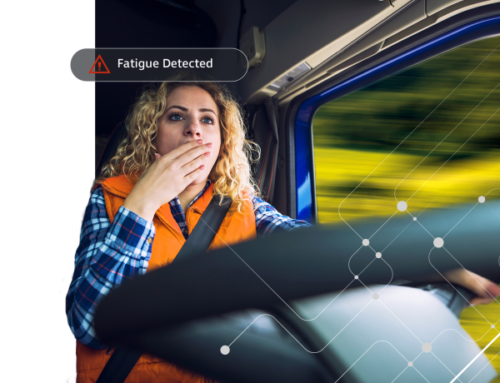
“Advanced Driver Assist System (ADAS), Driver Status Monitoring (DSM) and Blind Spot Detection (BSD) have already been making a difference to road safety by detecting and alerting on hazards on the road and high-risk driver behaviours,” he said.
“However, we are likely to see as significant step change over the next year or so as AI technology evolves further and becomes embedded into both hardware and software.
“Cloud-based computer vision provides powerful visual intelligence in the cloud, which can handle large amounts of data and leverage advanced computing capabilities.
“No fleet operation has the time and resources to review every triggered collision, near miss or driving event, so this advance in AI makes it possible to undertake post-analysis of all uploaded video without the need for manual processing.”
 Cloud-based computer vision models will provide unparalleled insights into driver behaviour and road events, says Richard (pictured).
“With automated post analysis of uploaded footage, it will be possible to cut through the noise, without the need for human intervention, to remove false positives and determine if any action is required when an incident occurs.”
He also highlighted developments in edge-based computer vision, which uses AI algorithms that are processed directly on the vehicle camera, to create a local vision-enabled solution.
“This utilises powerful embedded processing chips to analyse captured video in real-time to provide immediate feedback and insight to the driver,” said Richard.
“The latest intelligent detection cameras are able to identify and track vulnerable people – such as workers, pedestrians or cyclist – and trigger an alert to the driver when they enter virtual exclusion zones around the vehicle.
“Meanwhile, advances in vulnerable road user (VRU) perception technology, is providing a nuanced understanding of human behaviour. By empowering vehicle cameras to analyse age, direction, speed and distraction, it is possible to accurately predict a person’s actions, so drivers can receive real-time VRU collision warnings. This is enabling earlier driver alerts with a higher degree of accuracy than advanced driver-assistance systems (ADAS) technology.”