
Continental outlines road ahead for tacho
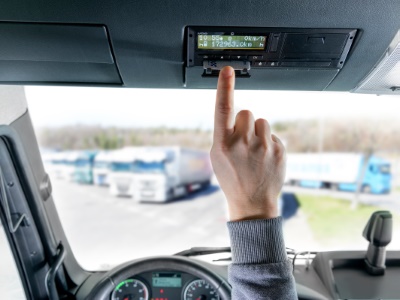 Continental Automotive, which is responsible for the VDO brand and its DTCO tachograph units, has highlighted several forthcoming changes pertaining to the rollout of second-generation intelligent tachographs.
“To comply with Mobility Package 1 future regulations, the DTCO 4.0 must be enhanced to include several functions, such as even more accurate positioning,” explained the company.
“The DTCO 4.1 will fulfil all EU requirements.”
From August 2023, all newly registered vehicles with a maximum permissible weight of more than 3.5 tons must be equipped with second-generation intelligent tachographs, Continental points out; then, by the end of 2024, all old analogue/digital tachographs must be replaced in all vehicles of this weight category engaged in cross-border traffic.
By August 2025, all cross-border-operating vehicles over 3.5 tons maximum permissible weight with a first-generation intelligent tachograph must be upgraded.
“The new DTCO 4.1 will detect and store a vehicle’s border crossings,” said Continental.
“The device will also log the position and time during loading and unloading and will be able to record this information together with driver and vehicle data for at least as long as the new regulation requires it. The new version will provide reliable data even more securely for more efficient traffic and trade monitoring.
“Unlike its predecessor, the DTCO 4.1 will use the European Galileo signal (OS-NMA), one of the first industrial applications to do so. OS-NMA stands for Open Service Navigation Message Authentication. It is a technique that adds cryptographic protection to navigation messages to provide the best possible protection against cyber-attacks.”
It continued: “From 1 July 2026, the tachograph requirement will also apply to vehicles used in international commercial transport, the maximum permissible mass of which exceeds 2.5 tonnes, including trailers or semi-trailers.
“Artisans with vehicles or vehicle combinations with a maximum permissible mass not exceeding 7.5 tonnes who transport their equipment or deliver their products within a radius of 100 km from their business location will be exempt from this regulation. Vehicles between 2.5 and 3.5 tonnes used for non-commercial freight transportation are also exempt. Driving must not be the main occupation of the person who is driving the vehicle.”
Continental highlights the concern some drivers may have in upgrading to a smart tachograph, due to the integrated DSRC technology enabling authorities to read certain information from the unit remotely. But it says that, provided drivers are complying with the rules, an upgrade can only be beneficial, as they are less likely to be stopped at the roadside as a result, thereby avoiding costly downtime.