
Awake at the wheel
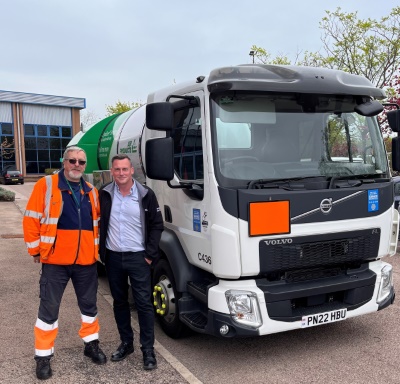
Air Products’ Kevin Bird and John Davies
John Davies, regional distribution manager at leading industrial gases company Air Products, explains how it is seeking to increase fleet safety by tackling sleep apnoea
Consider that you’re a truck driver and your job requires you to spend long hours behind the wheel.
Recently you’ve been feeling exhausted all the time, are battling frequent headaches and generally finding it difficult to concentrate.
Among the driver community, even admitting to such symptoms can be taboo, let alone actively informing your employer for fear of losing your licence.
But now consider the huge risk that the inability to concentrate poses for road safety.
Exhaustion, headaches and difficulty concentrating are just some of the symptoms commonly associated with a condition called obstructive sleep apnoea (OSA) that affects nearly 1.5 million people in the UK alone. For the transport industry, and professional drivers, it amplifies the risk of accidents and other safety incidents.
OSA occurs when the muscles at the back of the throat fail to keep the airway open. This results in repeated pauses in breathing during sleep, which can last from a few seconds to a few minutes. These pauses occur many times a night and lead to fragmented and poor-quality sleep.
One of the key indicators of sleep apnoea is loud and persistent snoring, which is often accompanied by choking or gasping sounds. Other symptoms include sleepiness and tiredness in the day and general irritability. It has even been linked to increased risk of hypertension, heart disease, stroke, diabetes and depression.
Recognising the very serious impact that excessive fatigue can have on cognitive function, reaction time and decision-making ability, at Air Products we have recently set up a voluntary sleep apnoea programme for our drivers. Their wellbeing, and a commitment to maintaining the highest standards of road safety were twin incentives for this process, but how have we made it work?
Aware of the reluctance in the driver community to admit to such symptoms, we have sought to create an open environment where drivers are able to bring up these concerns with their managers safe in the knowledge that they will be met with structured help and support rather than retribution.
The focus is on reassurance, encouraging drivers to speak up with confidence and demonstrating that advice and help is available quickly. Because here’s the thing: OSA is easily treatable and therefore not likely to affect licences or livelihoods if treated properly, and by contrast, suitable treatment could prevent more than 40,000 road accidents annually.
You’d be forgiven for thinking that this is a condition that just affects people who are older and/or overweight, or who smoke and drink excessively. The reality is that it can be linked to family history and wider medical conditions too and can affect relatively healthy people like one of our drivers, Kevin Bird.
Kevin is not overweight and exercises regularly, yet his breathing was pausing 11 or 12 times an hour prior to treatment. He had been feeling tired constantly and had ended up going to his GP about it who suggested he speak to his supervisor.
Understandably, Kevin was very nervous about making the call for fear of the wider implications but I’m proud to say that what he got was full support and treatment.
He was quickly assessed and diagnosed and is now undergoing treatment using a ‘CPAP machine’ that pumps air into a mask you wear over your mouth or nose when you sleep. An SD card also monitors and tracks how his sleep is going and adjusts air pressure accordingly.
The pauses in his breathing are now down to approximately once an hour. He has described the treatment as ‘life-changing’ and has been able to carry on driving with confidence, more alert and far less tired.
Having experienced the way Air Products treated his OSA, Kevin is now passionate about talking openly about what has, to date, been such a taboo topic to try and encourage others to come forward.
Given the massive health and safety ramifications if left untreated, addressing and treating OSA is critical. Raising awareness of it in the driver community, and the need for employers to support drivers suffering from it, is also crucial to the safety of millions of road users every day.