
Brigade puts DVS proposals in the spotlight
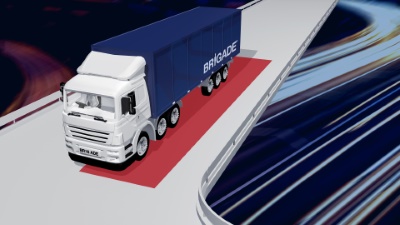 Safety experts from technology manufacturer Brigade Electronics have highlighted issues surrounding proposed changes to Transport for London’s Direct Vision Standard (DVS) scheme.
The proposals, which were recently subject to a consultation whose results were under review at the time of publication, have been designed to introduce more stringent rules for mandatory safety equipment which supports a driver’s direct vision from a cab, reducing the risk of collisions with vulnerable road users.
DVS is based on a ‘star rating’ indicating how much a driver can see from the cab in relation to other road users. From next year, it has been proposed that vehicles with ratings lower than three stars must be fitted to the new, stricter specification for safety equipment in order to be eligible for a safety permit to operate in London. This specification tightens existing safety equipment requirements that currently apply only to zero-star-rated vehicles.
James Ashford, head of UK connected services at Brigade, said the company applauds the efforts to vastly reduce accidents on the roads, but expressed concern over some aspects of the suggested changes.
The proposals stipulated that all false alerts from sensor systems – for example, drawing the driver’s attention to a parked car or a bollard instead of pedestrian or cyclist – must be eliminated. But James says that enforcing this may result in drivers colliding with stationary objects because the ability to warn the driver has been removed.
He added: “The proposals include completely eliminating blind spots. But in the event of an incident, Brigade’s experts are questioning how complete elimination is determined and who by – whether transport operators, manufacturers, or Transport for London.”
James also raised concerns about the lack of technical specifications provided by Transport for London. Brigade is recommending in its consultation feedback that customers with systems fitted between 2022 and 2024 should have permit extensions to alleviate the current burden of costs on operators and to allow installers extra time to equip the vehicles adequately.
A phased approach would also help to alleviate the issue of engineer shortages and the mammoth task of fitting all affected vehicles by the deadline, the firm says.

Brigade Electronics’ James Ashford
James explained that in 2022 more than 112,000 Direct Vision Standard permits, allowing operators of lorries over 12 tonnes to operate in most of Greater London, were issued among vehicles that met the one-star minimum requirement. Next year the minimum requirement will rise to three stars.
James said: “Easier and more efficient fitment times will be really important for DVS, with TfL estimating 165,000 vehicles will need to be equipped by the deadline of October 2024. We will be urging operators to plan accordingly due to high demand for products and a shortage of engineers in the marketplace.”
Brigade says the scale of the problems facing wider adoption of state-of-the-art road safety technology was recently laid bare by new research it has commissioned.
Transport operators were asked how they have enhanced operations and safety, and what features influence their decisions to invest.
James said: “While more than half of respondents say that vehicle safety technology had improved driver safety behaviour, and half reported a reduction in insurance premiums, a whopping 32 per cent claimed that they did not have any technology fitted and did not plan to do so in the next year.
“This is extremely worrying – this technology saves lives.”
Brigade’s road safety range
Launched in the mid-1970s, Brigade was the first company to introduce reversing alarms to the UK, and over the decades has provided a wide selection of road safety solutions for vehicle fleet operators.
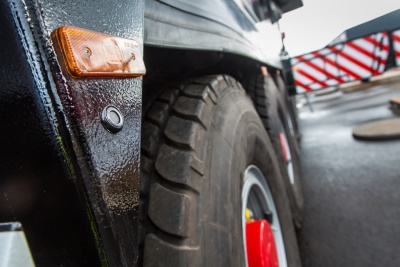 Its current suite of safety products includes the SidescanPredict side-detection system, designed for rigid vehicles, which calculates the risk of impact at the side of an HGV and alerts drivers to potential dangers. It reduces false alarms by differentiating between moving objects such as pedestrians and cyclists, and static objects such as parked cars and bollards.
Radar Predict is Brigade’s latest system which meets both DVS proposals and Regulation UN.151. Designed for articulated vehicles, Radar Predict was launched at the CV Show and can detect whether the vehicle has a trailer, eliminating false alerts during articulation. It is also able to determine when a tractor is driving without a trailer and can adapt for vehicles carrying interchangeable trailers.
Careye is a premium AI camera that is also predictive, calculating the future course of motion of vulnerable road users or objects on the nearside of a vehicle and giving visual and/or audible warnings to the driver.