
Tecalemit’s CV play detector
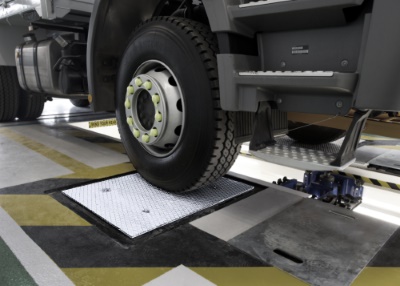 Among Tecalemit Garage Equipment’s range for commercial vehicle applications is a heavy-duty play detector, the DE/7353.
“Understandably, checks on braking systems come first in many CV operator’s inspection programmes,” said Adam Hilton, Tecalemit’s sales and marketing director.
“However, operators also need to consider steering and suspension components. This area is essential as steering and suspension issues account for almost as many MOT failures as brakes.
“It is possible to improve the detection of defects in steering and suspension components by using Tecalemit’s DVSA-approved MOT play detector.”
Tecalemit’s DE/7353 heavy-duty, pit-mounted play detector consists of two recessed, hydraulic platforms and a powerful pump unit. With a 16t axle capacity, the Tecalemit unit is suitable for testing HGV and PSV vehicles.
“During an inspection, technicians are safe from ‘finger trapping’ because the vehicle rests on its road wheels,” explained Adam.
“To use the play detector, a technician drives an axle onto them and controls the movement in multiple directions using a robust controller. The wheels move relative to the vehicle’s body revealing play and wear easily missed from just a visual check.
“Tecalemit’s CV play detector is versatile, with installation possible into almost any existing CV workshop. You can choose between in-pit or above-ground hydraulic pump positioning and cabled or Bluetooth hand control options.
“This play detector safely tests the steering and suspension components without jacking the vehicle, handling the wheels, or using pry bars to identify movement. This allows technicians to identify various issues, such as broken welds, loose tie-rod ends, worn kingpin bushings, and other damaged components.
“The DE/7535 enables all operators to conduct the same test procedure used in DVSA MOT Authorised Testing Facilities (ATFs). Using this standard assessment, technicians can identify and fix any potential MOT failure items before the actual test.
“This can help avoid significant vehicle downtime from dealing with MOT failures and saves time returning to the testing station for a re-test after the repairs have been completed. It also helps to ensure an operator’s compliance in maintaining a roadworthy vehicle using safety inspections carried out to MOT standards.”