

Valeo helps fleets cool off with AC advice
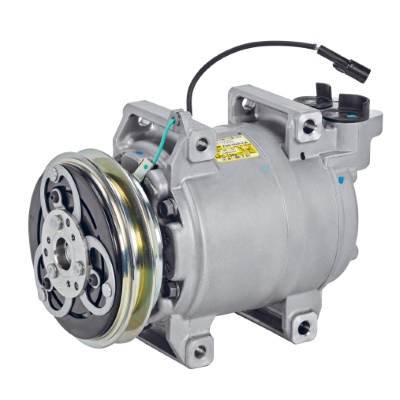 Air conditioning specialist Valeo has issued advice for fleets on the maintenance of truck air conditioning systems to help ensure optimal operation during the warmer months.
“It is important to know that although the air conditioning system is a closed circuit, it still loses about 5 to 10 per cent of its refrigerant each year,“ said Valeo.
“These losses occur due to diffusion on rubber pipes and seals. These losses not only affect the efficiency of the air conditioning system for cooling purposes, but also its ability to carry oil to lubricate the compressor.
“An air conditioning system is filled with about 500 g of refrigerant and could have only about 365 g left after about 3 years due to these losses. But what does that mean for our circuit? The compressor will continue to work, because as long as there is at least 2 bar of pressure in the system, approx. 50 g of refrigerant and a mild outside temperature of approx. 19 degrees, the compressor will continue to work.
“The problem is that we now have 150 g less refrigerant to transport our lubricating oil back to the compressor. When the operation of the compressor becomes more strenuous, for example on a warmer day of about 30 degrees when we set the air conditioning to the maximum setting, the compressor is likely to fail due to lack of lubrication.“
Therefore, in addition to checking the refrigerant level, says Valeo, it is important to check other components of our air conditioning system.
“A visual inspection of the condenser, pipes and compressor for signs of damage, corrosion or blockages is essential,“ said the company.
“For example, the condenser can be damaged by road debris such as stones or salt, and even minor damage to the cooling fins can affect the operation of the component. A damaged condenser can reduce the cooling capacity, which means that the refrigerant, which should condense to a liquid, remains as a gas, which increases the pressure and makes the system ineffective and can damage the compressor.
“When it comes to maintenance, the standard rule for adding oil (without replacing components) is simple: the amount of oil taken out when the refrigerant is recuperated is the amount you add new.
“Rubber lines, connectors and sealing rings should be checked for signs of damage or wear to prevent further problems. When the air conditioner is started after the winter months, it should be run at idle or low speed to allow any oil deposited in the lines to flow back to the compressor.
“The cabin air filter should also not be neglected, as it can become clogged with leaves or other blockages in the water drains, allowing water to enter and soak in. These blockages then find their way onto the heat exchanger or evaporator and can disrupt the sensitivity of the system.
“If dirt and residue from the cabin filter lie on the evaporator like a mat, the injected refrigerant cannot evaporate completely and returns to the compressor in a liquid state. As we know, liquids cannot be compressed and the compressor will be damaged. This would lead to failure.“
A spring air conditioning check can not only be beneficial for the comfort and effective operation of the system, says Valeo, but also prevent further repairs.
“Besides the risk of damaging the compressor, the cabin air filter is a hotspot for pollen, fungi and bacteria,“ added the firm.
“It is always advisable to change it to protect the driver and passengers.“
Valeo offers an extensive range of compressors, condensers, dryers, cabin air filters and fan motors, with a range comprising over 2,700 items.