
2 Start assesses AI role in future of logistics
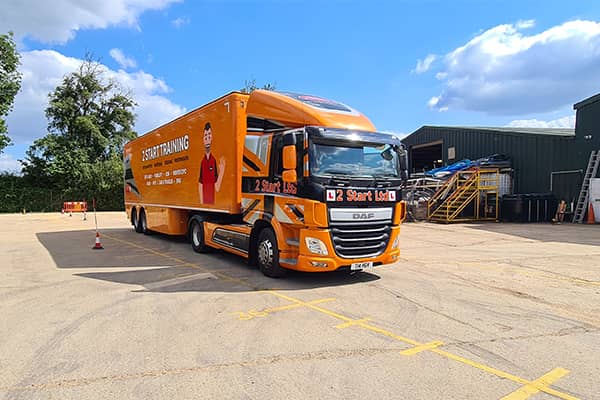
Transport training provider 2 Start Ltd has said that, while artificial intelligence (AI) is unlikely to replace HGV drivers in the near future, additional qualifications such as ADR may help ensure job security in a context of increasing automation.
“As progression in AI is ever more apparent, many are eager to leverage AI functions to help with business tasks and saving costs,” said the company.
“From receptionists to customer service representatives, even translators, AI is expected to dominate the globe and force many out of their jobs in the coming decade…
“The progression for automotive vehicles (also known as driverless vehicles) has been a hot topic the last few years. Now, it seems that there is even more of a push to begin the journey of autonomous freight work.”
The company cites Office for National Statistics projections suggesting that 31.39 per cent of managers and directors in transport and distribution jobs are at risk from automation.
But it added: “Transport managers and drivers are still vital now as they ever were… it is one of the most secure jobs today. Although AI could drive an HGV, this is in the very distant future.
“The reality is that although the concept is more probable in the US, it is probably not as viable for the UK, taking into consideration that the UK has complex and highly congested road networks. UK motorways tend to have more junctions, so various route calculations would be made – whereas in the US, they tend to have longer, straighter roads which are relatively uncongested.
“An experienced HGV driver will have the knowledge and competence to understand these obstacles, unlike AI which will never have the same instinct, feeling or human capability to react accordingly in certain scenarios.”
Some have suggested that fully self-driving vehicles won’t make their debut until at least 2035, 2 Start points out – but AI can aid in transport and logistics in other regards in the meantime.
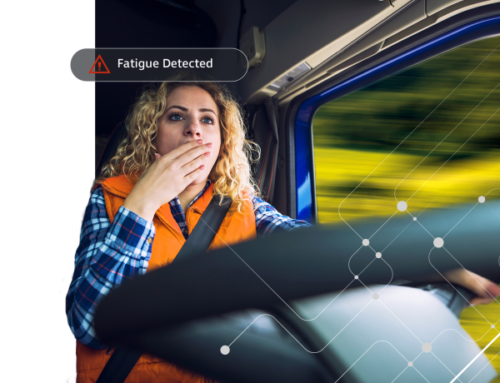
“An example of this is the use of AI dashcams, which will help improve safety for fleets,” the company continued.
“For instance, the dashcam can detect obstacles within blind spots… which can help drivers manoeuvre more confidently…
“The use of AI powered technology could also benefit transport managers when planning journeys.”
With an approximate reduction of 500,000 jobs predicted in the transport and logistics sector over a 20-year period due to AI, says 2 Start, nonetheless driverless HGVs are far from likely to become a widespread reality in the near future.
However, “if HGVs are to become driverless, other situations must be factored,” the company added.
“Take a certified ADR HGV driver: how can a vehicle ensure minimal risk of harming others if there are dangerous goods on board? The vehicle will most likely only be aware of the driving, not the conditions of the vehicle itself – or its cargo, more importantly.
“This is why joining the logistics sector is still a great career move and one that provides confidence and job security against the AI takeover…
“The risk of being replaced by automated HGV vehicles is low. Securing your HGV licence means that you are securing your career in the logistics sector.
“Additional training (such as ADR training) will make you more of an asset, as understanding the risk factors dangerous goods can pose… is the difference between catastrophic casualties, and minor injuries.
“Training now is the best opportunity to upskill and provide yourself with job security. Gaining your ADR certification will… provide you something AI cannot factor for – human logic and dexterity. After all, AI cannot accomplish complex physical work that requires dexterity or precise hand-eye coordination like the handling of dangerous goods.”
2 Start Ltd says its team of advisors can help guide those seeking to join the industry on their training path to become fully certified HGV drivers, as well as providing ADR certification training.