
Maple: tackling the cargo crime crisis
 CV security specialist Maple has highlighted recent key freight crime trends and developments, including a concerning rise in cases with ‘insider’ involvement.
“Freight crime is far from a new phenomenon, nor are the challenges our industry face – for as long as there have been vehicles on our roads, there have been bandits waiting to pounce,” said the company.
“During a recent and lively round table parliamentary discussion on Freight Crime and Supply Chain Security, the debate soon turned to the lack of suitable truck parking facilities… as it so often does.”
And for good reason, says Maple.
“It is commonly accepted that ‘cargo at rest, is cargo at risk,’ with some 59 per cent of all incidents occurring at ‘unsecured parking locations’. However, to attribute the freight crime problem exclusively to that of parking ignores some of the deeper underlying issues.
“Furthermore, with no apparent resolution available in the foreseeable future to the parking conundrum, it also fails to address what hauliers could be doing, to better protect themselves and their cargo.”
It is important to recognise that cargo crime is not a petty crime, adds the firm; it is big business, a multimillion pound operation, orchestrated by highly organised and adept criminal gangs.
“NaVCIS (The National Vehicle Crime Intelligence Service), estimates that it costs the UK Economy upwards of £700 million per annum; more than 5,000 incidents were recorded in 2022 alone, yet it is widely acknowledged that freight crime is vastly under reported, with the actual number likely to be even greater,” said Maple.
“The further we delve into the statistics, the more uncomfortable the reading becomes for the transport industry. The types of goods being targeted by criminals are hugely varied, with so called ‘theft attractive’ goods at the top of their shopping list. Tobacco, food and drink, clothing and cosmetics top the list of the most frequently targeted goods, highlighting that it is not just high value items that appeal to the cargo thieves.
“The most uncomfortable of realities however is to be found when considering the profile of the offenders and nature of their crimes. The criminals responsible understand supply chains, they know which companies have which contracts, they know routes, they know schedules and they know where the vulnerabilities lie.
“Furthermore, according to TAPA (Transport Asset Protection Association’) cases that cite ‘internal involvement’ rose by a staggering 623 per cent in 2022 (compared to 2021) – a statistic that emphasises the impact of a deepening economic crisis.”
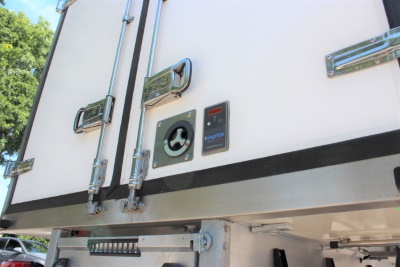 Facing such a multidimensional threat, says Maple, it is imperative that transport operators put appropriate security measures in place. With almost 50 years’ experience of providing innovative commercial vehicle security products, the company says it is well placed to assist operators in implementing an effective solution to safeguard their operations.
“When looking to enhance the security of your goods in transit operations, there are three core principles to consider, physical security, access control and data,” said Paul Nunn, marketing manager for Maple.
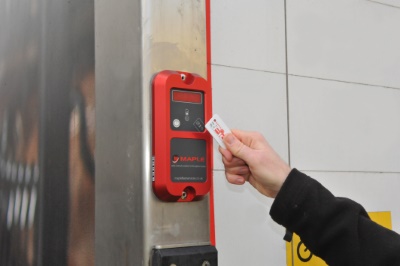
“When we consider the ways in which goods are now targeted it is crucial to ensure the right access control measures are in place from the outset. Our security platform allows clients to manage this simply and effectively, ensuring security is maintained without impacting efficiency.”
“We have also seen how the role of data has massively shifted in recent years. The Maple platform provides complete transparency of operation, assigning accountability for all door open events. In the event of suspicious or unusual activity we are able to quickly identify this, allowing further investigation. As concerns over collusion and insider evolvement rise, this is an incredibly powerful tool.”