
Industry workshop: government EV grant design is failing SMEs
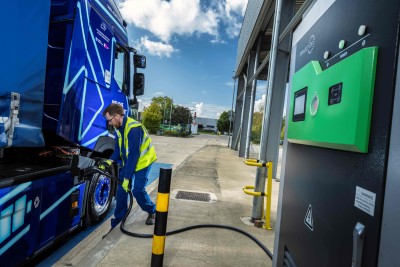 Independent freight operators, insurance specialists, energy companies, charging infrastructure providers and finance experts reached a consensus at a workshop held last month: the total cost of ownership case for battery electric trucks is real, but the route to adoption for small and medium-sized operators is being undermined by poorly designed government support and a lack of coordination across the supply chain.
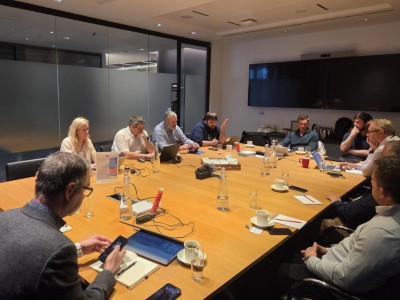
The workshop, hosted by freight decarbonisation organisation TwentyForty as the first in its 12 Pillars of Change series, brought together expert panellists from Aon, EY, Octopus Energy, Zenobe, Ford & Slater DAF, Voltempo, Neertec and Envevo alongside independent fleet operators running between 42-tonne electric artics and first EV trials.
One conclusion was that energy costs have a hard floor, and operators need to plan accordingly. The workshop heard that the lowest credible delivered energy cost in Northern Europe is around 20p per kilowatt hour on a full-cost basis, factoring in generation, balancing and distribution. Current market rates of 23–26p/kWh were described as manageable, but operators were urged to model on realistic assumptions rather than optimistic projections about future price falls. The UK’s wind-dominated grid means time-of-use tariffs that promise cheap overnight charging cannot be guaranteed, because when the wind drops, the marginal generator is gas.
Government grant funding risks being captured by large operators, says TwentyForty. The latest grant scheme provides up to £81,000 towards a tractor unit, but the room raised serious concerns that there are no caps or ring-fencing to protect SME access. One participant described this as a significant design flaw, arguing that large operators placing volume orders could absorb the funding entirely, while the independent hauliers who most need support are left out. The consensus was clear: grant funding should be targeted at those who genuinely cannot bridge the cost gap, not those who can already afford to transition.
 Another discussion point was that the truck replacement cycle is about to change fundamentally. Operators described planning for 15 to 20 year vehicle lives, with battery replacement cycles extending the chassis far beyond the traditional 5 to 8 year diesel replacement model. One operator outlined a strategy of running new electric trucks for 8–10 years, fitting new batteries, and running them for another decade. With lithium iron phosphate battery warranties covering 4,000 complete charge cycles – translating to approximately 2 million kilometres over eight years – this approach is commercially credible, says TwentyForty, but it poses an existential challenge for truck manufacturers whose business models depend on shorter replacement cycles.
Insurance is not the barrier the industry assumes, adds the organisation: operators in the room reported no premium difference between electric and diesel trucks. The real risk identified was not pricing but practice: insurers writing off repairable vehicles because loss adjusters lack the technical knowledge to assess battery electric truck damage. With high-value modular battery packs, a minor incident can trigger a total loss declaration on a vehicle that could be repaired. The bus sector, which is 7–8 years ahead on electrification, has nearly a decade of operational data showing far fewer fire incidents than diesel, but this evidence has not yet reached truck underwriters.
Carl Musson, general manager at MTS Logistics, speaking about the day, said: “What struck me most was hearing from people in insurance, energy and finance who are dealing with the same problems from completely different angles. As an operator you’re focused on the job in front of you. This kind of conversation forces you to study the bigger picture. The numbers are getting there, but until someone genuinely takes the complexity off the table and gives you something simple to analyse, most of the industry is going to keep sitting on its hands.”
The 12 Pillars of Change workshop format puts an expert panel and an operator panel in the same room with equal weight, working through a single barrier to decarbonisation. The experts must defend their positions against operator reality. The operators must engage with what is actually on offer. The cross-sector accountability is the point.
Jamie Sands, head of solutions at Welch Group and founder of TwentyForty, said: “We spend too much time talking about electrification in echo chambers. This format forces the conversation that needs to happen: insurers hearing what operators are actually experiencing, energy companies confronting the reality of depot power, finance specialists being told their models don’t survive contact with cash flow. The room proved that the commercial case works, but only if the support structures catch up. Right now, they’re not catching up fast enough for independent operators.”
Workshop 2 takes place on 22 May 2026, tackling ‘Power In: The Infrastructure Roadblock’. The session will address grid connections, DNO timelines, depot power constraints and landlord negotiations: the practical barriers that emerge once an operator has committed to electric vehicles but cannot get the power to charge them.
TwentyForty is looking for independent fleet operators who have hit roadblocks when attempting to energise their depots, and invites interested parties to get in touch.