
ZF outlines benefits of new bus and coach axles
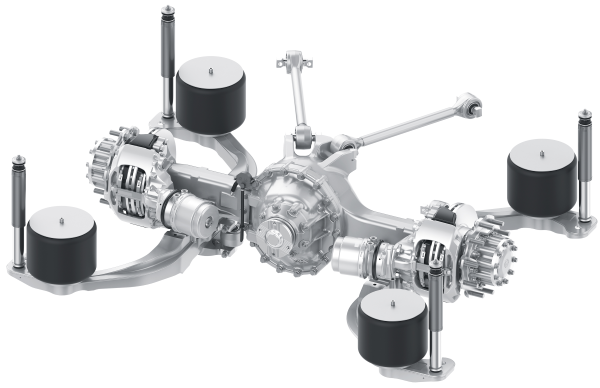 ZF has developed a new range of axles for the bus and coach sector, designed to cope with the demands of an electric powertrain.
Engineered for higher performance and improved energy efficiency, the new axles have a higher torque capacity and can support a heavier vehicle, says ZF. They are also more durable and can manage more demanding duty cycles, including applications where electrified drivetrains place higher loads on axle systems.
ZF’s new range includes the A134 drive axle, the AV134 portal axle for city buses, the AVN134 non‑driven axle, and the RL 914 EC for city buses, along with the RL 824 EB front axle for coaches. All are part of ZF’s ‘Fit4eMobility’ axle strategy and are designed for new vehicle platforms while retaining the same installation points as previous generations. This enables the higher capability axles to be introduced without requiring OEMs to make major changes to existing chassis, suspension or driveline layouts, says the firm.
In terms of design, ZF has made refinements to the bearings, bevel gearsets and internal friction characteristics, alongside optimised lubrication, using low‑viscosity oils and improved oil management across the range. Together, these measures are said to minimise internal losses and improve overall energy efficiency, particularly in applications that use energy recuperation.
Overall weight reduction has also been a key area of focus throughout the range.
“Improvements to the axle casing, combined with optional aluminium spring carriers, result in a lower weight,” said ZF.
“This helps offset the additional mass associated with batteries, electric drives or emissions control systems. For operators, lower axle weight supports greater payload flexibility and improved vehicle efficiency, especially in weight‑sensitive applications.
“Lifecycle costs have also been addressed. Increased robustness, improved sealing concepts and extended service intervals limit maintenance requirements, helping to limit unplanned downtime and workshop visits, contributing to a lower total cost of ownership.”
Each axle in the next‑generation portfolio has been engineered to address specific application requirements: the AV134 portal axle for city buses is said to achieve up to ~4.2 per cent lower energy consumption compared to the previous generation in urban bus duty, enabled by portal‑specific friction optimisation and recuperation‑optimised layout.
Meanwhile, developed specifically for coach applications, the A134 maintains unchanged installation dimensions to allow direct platform carry‑over without chassis or driveline redesign.
The AVN134 non‑driven centre axle increases permissible axle load from 11.5 t to 13 t while reducing mass by ~87 kg compared with its predecessor.
The RL 914 EC front axle for city buses raises maximum axle load from 8.2 t to 9 t while weighing the same as the previous generation, specifically enabling more flexible front‑mounted battery distribution in low‑floor city bus architectures.
Finally, the RL 824 EB front axle for coaches increases axle load from 7.5 t to 8.2 t while maintaining coach‑grade suspension travel and steering geometry, addressing higher front‑axle loads driven by electrified coach layouts.