
RHA: MPs right to call out flawed EU border system
 The Road Haulage Association (RHA) has praised MPs for raising concerns about the ‘flawed’ European Entry/Exit System (EES) as part of a recent debate held in Parliament.
The EES is the EU’s new digital border management system, which incorporates fingerprint and facial scan check technology for non-EU citizens entering the bloc. It enables more efficient enforcement of the so-called 90/180 rule designed to prevent non-EU citizens – including British truck and coach drivers – from spending more than 90 days in the Schengen area within any 180-day window.
The policy as applied to UK citizens is a direct consequence of Brexit. According to the RHA, stricter enforcement of the rule since the EES became fully operational in April has left professional truck, coach and van drivers running out of days for international work, which is limiting the jobs that operators can accept, as well as pushing up costs and weakening the resilience of the supply chain. In the Parliamentary debate, a number of MPs raised questions about the impact of the EES on businesses, as well as holidaymakers due to queues at borders.
Dr Al Pinkerton, the Liberal Democrat MP for Surrey Heath, suggested to the border security minister Alex Norris that he raise with EU counterparts “the case of UK hauliers, who are reporting inconsistent scanning of their exit from the Schengen area and real fears that their 90 in 180-day entitlement will artificially run down as a result”.
“That is going to have a profound effect on our economy,” said Dr Pinkerton.
The minister replied that the home secretary was due to meet European counterparts the following week and that the EES was on the agenda.
“I am concerned to hear about the inconsistent scanning, which I know has a profound impact on businesses and workers,” added Mr Norris, offering to look at any examples “to make sure people are not being affected in ways they should not be”.
Mike Reader, the Labour MP for Northampton South, said one in five of his constituents worked in logistics, and that the issue of the EES came up regularly: “including most recently with Steve Devereaux from BSI Transport, who explained to me the costs and the red tape that the current entry system creates.”
The minister said: “We are looking at the impacts on the economy… Our clear message is to prioritise flow, and that is why we are having those conversations.”
Commenting after the debate, RHA trade policy lead Alastair Gunn said: “We are pleased MPs have shone a light on how the EES is unfit for purpose. Professional coach, van and haulage drivers are some of those most affected by its failings, in addition to those tourists who have faced unacceptable queues at ports and airports. Inconsistent use of biometric systems is causing significant concern to hauliers worried about their livelihoods, and delays – especially at Calais – are creating serious problems for coach companies taking British tourists in and out of the EU.”
Mr Gunn reiterated the RHA call for a professional driver exemption to the 90/180 rule. “Restricting access for British drivers supporting European supply chains and tourism does nothing to help the UK-EU trade relationship,” he said, adding: “It was clear from the debate in Parliament that the full impact EES is having on the coach and haulage sectors is not yet properly understood in government. We look forward to engaging with new ministers in the coming weeks to help close that gap.”
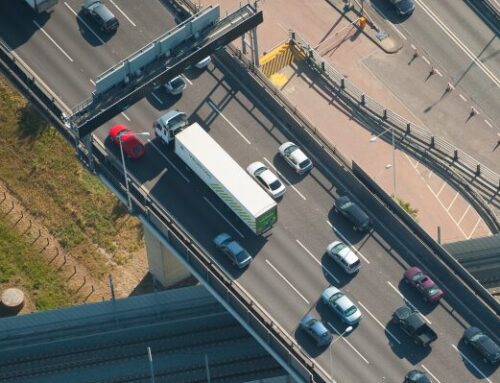
Meanwhile, as British citizens prepare to descend on the EU this weekend for peak holiday season, Logistics UK has expressed disappointment at ongoing reliance on Operation Brock, the traffic management scheme that sees lorries destined for the ports at Dover and Folkestone forced to queue on the M20 at peak times. The trade group says the lack of a long-term, sustainable solution to managing seasonal traffic flows in the area is harming UK trade and draining public funding.
“Ten years after the Brexit vote, it is deeply frustrating to see public money being spent to deploy temporary cones on the coastbound carriageways our members use every day to export to continental customers,” said James Mills, head of trade policy at Logistics UK.
“Every cone placed on the motorway costs the public money, funding that could be used to create a permanent solution to manage coastbound traffic at peak times… Operation Brock is an inefficient and expensive workaround for an issue that our sector has been raising with government for years, with over £3 million of public money spent last year alone deploying the scheme. Our members have had enough of bollards – they deserve a proper solution.”
He also expressed frustration at the impact of the EES on Logistics UK’s membership.
“The Short Straits crossing remains the easiest and quickest way to move goods to Europe, but a decade after the country voted to leave the European bloc, we are no closer to a permanent solution to the entirely predictable queues which form during the summer getaways. In fact, the queues have continued, with the EES having recently replaced passport stamping with biometric checks before the EU system is working reliably. This is deeply frustrating both for our members, who want to deliver for their customers, and those who want to start their holidays rather than sit in endless queues.
“Against the backdrop of declining UK exports to the EU, it is more important than ever that government does everything possible to reduce friction on our key trading routes. The EU remains our biggest market for goods exports and it is critical that this trade is protected.”
This week, the transport secretary Heidi Alexander announced £20 million of new government funding to help reduce queues by increasing passport check booth numbers at Dover and capacity for processing vehicles.