
Thorworld: relieving pressure at loading points
 Loading equipment specialist Thorworld Industries has highlighted some of the problems that can arise at loading points due to evolving operational requirements.
The company cites research suggesting that 27 per cent of distribution centres identify the receiving dock as their most congested area.
“Congestion at these points can create pressure elsewhere in the operation and affect throughput and vehicle turnaround times,” said Ian Langan of Thorworld Industries.
Part of the reason is that transport operations have changed considerably over the past decade, he says.
“In many cases, loading arrangements that were originally designed for one set of operational requirements are now supporting something very different. Vehicle profiles change, delivery patterns evolve and throughput expectations increase. Yet loading infrastructure is frequently expected to continue performing exactly as it always has.”
While operational changes and reconfigured facilities often deliver commercial benefits, says Ian, they can also place additional demands on loading areas that were never designed to accommodate them.
“Where that complexity is not being properly managed, in my experience, is where problems start to occur as businesses find themselves relying on temporary adjustments or workarounds in order to keep goods moving. These approaches may solve the immediate problem but can create others as they can introduce inefficiencies – and perhaps more importantly add additional risk…
“The UK’s transportation and storage sector (the HSE category that covers warehousing, distribution centres, freight handling, and logistics operations) continues to report fatal injury rates more than 2.5 times higher than the all-industry average, while more than two million working days are lost each year due to work-related injury and ill health. Together, these figures demonstrate that the impact of poor loading arrangements can reach much further than many businesses assume…
“We often find that businesses have become accustomed to delays, workarounds and operational frustrations that they simply see as part of the job. Time and again, customers tell us they wish they had addressed those challenges sooner, but the workarounds had become so ingrained in the operation that they were accepted as normal rather than questioned.
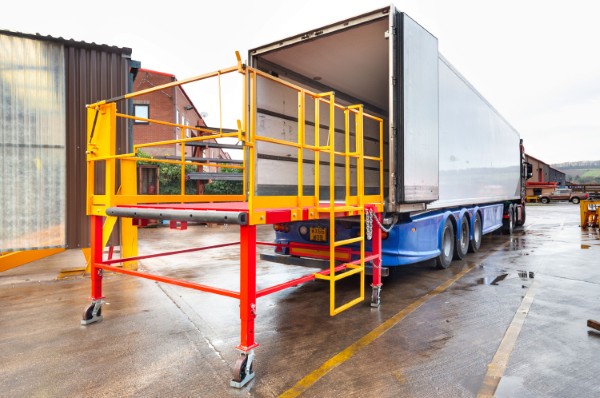
“The reality is that there is rarely a single answer. Some operations benefit from relatively simple changes, whether that is improved access arrangements, additional safety measures or a mobile loading platform that provides greater flexibility. Others justify a larger investment because the demands being placed on the site have fundamentally changed, making a bespoke loading platform or reconfigured loading area the more effective long-term solution…
“Small changes can have a significant impact when they remove friction from a process that takes place hundreds of times a week. Better matched loading solutions can help reduce delays, improve vehicle utilisation and create a safer working environment without requiring wholesale changes to the operation.”