
Before blaming the driver: five fuel-system checks that protect mpg
When fuel consumption rises, driving style is often the first place operators look. Diesel Technic’s Parts Specialists explain why the vehicle’s fuel system should be checked before the driver takes all the blame
 Fuel consumption starts to creep upwards. A vehicle becomes harder to start, performance feels inconsistent, or the fuel gauge no longer matches the amount going into the tank.
Driver behaviour, routes, loads and idling all matter, but so does the vehicle’s ability to store, measure and deliver fuel correctly. Before launching another driver training exercise, operators should be confident the truck is providing an accurate picture.
Drawing on common faults seen across the DT Spare Parts fuel-system range, Diesel Technic’s Parts Specialists highlight five areas operators should ask their workshop to check when the figures no longer add up.
1. Pressure problems can look like poor driving
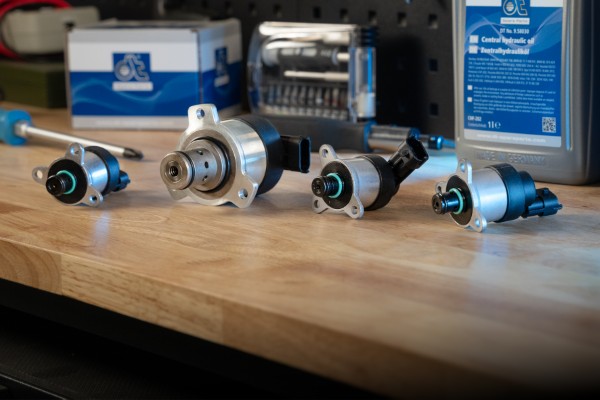
Modern common-rail systems rely on precise fuel pressure. If pressure-control or relief valves become inconsistent, the symptoms may include difficult starting, uneven running, reduced power or increased consumption.
Those problems can easily be attributed to the route, load or driver. A replacement fuel pump should not be the automatic conclusion whenever pressure is low; the pressure-control valve, electrical supply, connectors or sensors may be responsible.
The key question is whether the workshop has identified the source or simply replaced the first component linked to the fault code.
2. A dirty filter may point to a bigger failure
What the workshop finds inside an old fuel filter can be as important as changing it.
Metal particles, chips or other debris may indicate that another component is deteriorating. Simply fitting a new filter without finding the source risks repeat failures, further downtime and damage to the replacement parts. Once the failed component has been identified, the system may also need flushing.
Regular filter changes and draining water separators remain inexpensive compared with replacing pumps or injectors. Operators should ask whether anything was found in the filter and where it came from.
3. Air ingress can cause intermittent faults
A vehicle that starts normally during the day but struggles after standing overnight may not have a battery problem. Air entering the fuel system can allow fuel to drain back towards the tank.
The cause may be a damaged seal, leaking line or incorrectly fitted component. Plastic lines can draw in air if they rub against another part, while metal lines may leak if installed under tension. Incorrect tightening can also distort a fuel-pump housing.
Because the vehicle may behave normally by the time it reaches the workshop, recording when the problem occurs can help direct the investigation towards air ingress rather than the starter or battery.
4. An inaccurate gauge undermines the data
Fuel management decisions are only as reliable as the information behind them.
A faulty level sensor can make a vehicle appear to use more or less fuel than it really does. Corroded connectors, damaged cables or wear inside the sensor can alter the dashboard reading. A sensor of the wrong length can also give inaccurate results.
Where fuel card records, telematics and dashboard readings disagree, operators should confirm that the gauge can be trusted before assuming poor driving, fuel theft or an accounting error.
5. Replacement parts must match the application
Across a mixed fleet, components that look similar may differ in dimensions, pressure rating, capacity or electrical characteristics.
The wrong level sensor may fit but report inaccurately. A fuel line may sit under tension once installed. A tank replacement should also include an inspection of its brackets, straps, rubber pads and bolts, as worn mountings can damage the new tank.
Diesel Technic’s recently updated DT Spare Parts range covers fuel pumps, control valves, filters, lines, tanks, level sensors and associated components for commercial vehicles. Application information can be checked through the Diesel Technic Partner Portal, helping reduce the risk of incorrect parts and repeat visits.
Follow the fuel before challenging the driver
Fuel management is often built around telematics, purchasing and driver performance. Those remain essential, but they depend on the vehicle storing, measuring and delivering fuel correctly.
When mpg falls or the figures stop adding up, operators should ask whether pressure control, contamination, air ingress, sensor accuracy and component fitment have all been checked.
The driver may still be part of the answer. But first, make sure the vehicle itself is not distorting the figures.