

DeterTech: a roadmap for reducing vehicle crime
 Security solutions provider DeterTech has offered its perspective on reducing vehicle crime in parking environments.
“Parking security has historically leaned on visible deterrents: CCTV, lighting and patrols,” said Dave Lewis, police relationship manager at DeterTech.
“These remain important, but they are no longer sufficient on their own, especially when around 75 per cent of vehicle thefts go unsolved. Offenders are becoming more organised and more deliberate in how they target sites, and they know exactly where to look for weaknesses: dark corners, cameras that don’t talk to each other, spaces that feel unwatched.”
Deterrence has to evolve to keep pace, he contends.
“It’s not enough simply to have measures in place; precautions need to be visible, credible, and integrated, because offenders make decisions based on risk. If the reward appears to be outweighed by the risk, opportunist offenders and organised crime groups (OCGs) alike will seek out other targets.”
The first duty of any security measure is deterrence, says Dave.
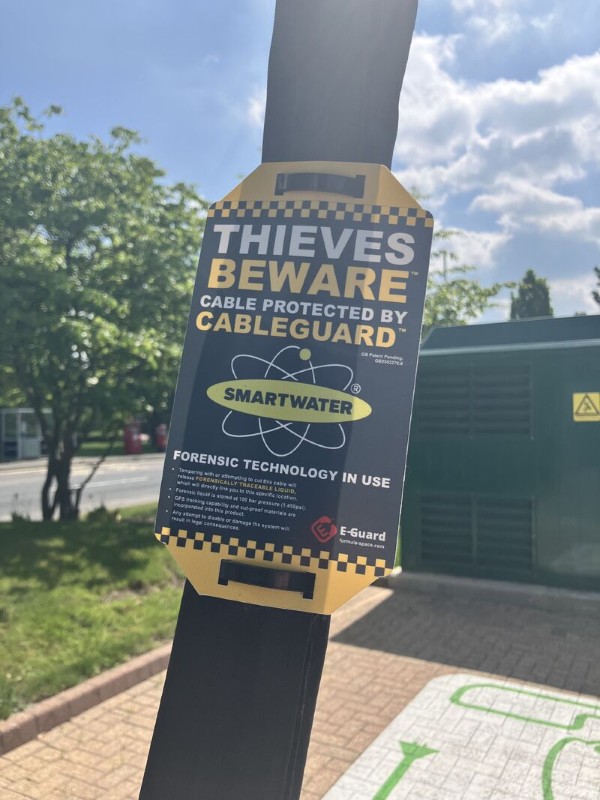
“If offenders don’t know it’s there, it won’t change their behaviour, which is why visible signage is essential in signalling that a site is protected.”
As parking evolves, new risks are emerging too.
“The growth of EV infrastructure has introduced a rising threat in the form of copper cable theft from charging points. These installations are often located in accessible or lightly supervised areas, making them attractive targets given the resale value of the materials involved. Designing out this risk means combining physical protection, monitoring and clear deterrence – it has to be obvious that any tampering will be detected.”
A key challenge across parking environments is fragmentation, adds Dave, with different systems operating in isolation from one another.
“Joined-up systems stop being a record of what already happened and start acting as an early warning: patterns and anomalies that would otherwise sit unnoticed in separate feeds become visible in time to act on them, shifting the balance from reactive response to proactive prevention.
“At DeterTech, this is where our crime intelligence work comes in. Working closely with police forces gives us visibility of how, where and when vehicle crime is actually happening, and that intelligence feeds directly back into how we advise operators to protect their sites. It’s not just about reacting to what’s already on camera; it’s about using what we know from working with law enforcement to anticipate where the next attempt is likely to happen and get ahead of it.
“Vehicle crime doesn’t exist in isolation, and neither can its prevention. Parking operators have a critical role to play in the wider security ecosystem. By sharing data and insights with local authorities and law enforcement, they contribute to a bigger intelligence picture that benefits everyone, not just their own sites.”