
BM raises the bar with lifting roller bed brake tester
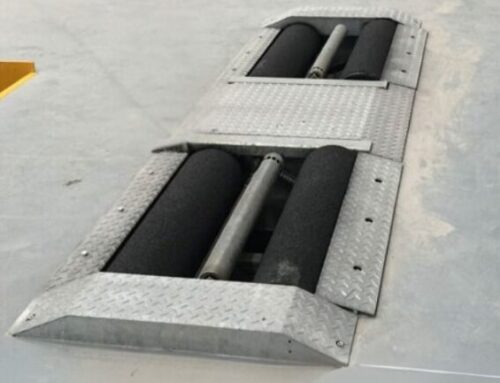
 Testing equipment manufacturer BM Autoteknik has outlined the features and workings of its BM18200, a lifting roller bed brake tester designed to deliver safe, automated loaded brake testing for DVSA Authorised Testing Facilities (ATFs) and commercial workshops.
Denmark-based BM first introduced a heavy-vehicle roller brake tester with a hydraulically lifting roller bed for load simulation in 1982. The concept remains in use today, with updated versions still produced more than 40 years later.
In New Zealand, loaded brake-test regulations introduced in 2008 created demand for a lifting roller bed brake tester. The BM18200 was developed to meet this requirement and has been sold in the Australasian market for more than 10 years.
Now, says BM, UK loaded-testing requirements have created demand for the unit in British test stations and workshops. For ATF use, the BM18200 brake tester has been tested and approved by the Garage Equipment Association (GEA) on behalf of the Driver and Vehicle Standards Agency (DVSA).
BM’s long experience with simulated load testing has led to practical solutions for the additional demands involved in safely applying load during brake testing.
“Spring and airbag suspension systems require different loading approaches, so the BM18200 automatically differentiates between them,” explained the company.
“When air suspension is detected, the system monitors the vehicle’s self-levelling response and adjusts hydraulic load; if the airbags increase the applied load excessively, the brake tester will back off, helping protect the vehicle chassis restraint attachment points.
“This airbag control requires sophisticated software to manage the hydraulic loading system. It allows safe chassis loading rather than simply tying down axles, and when the chassis is loaded and the airbags inflate, the vehicle’s electronics can supply full air pressure to the brakes.
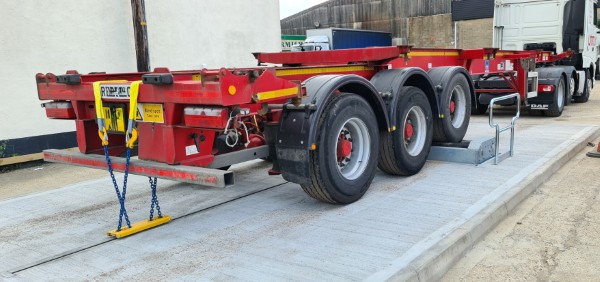
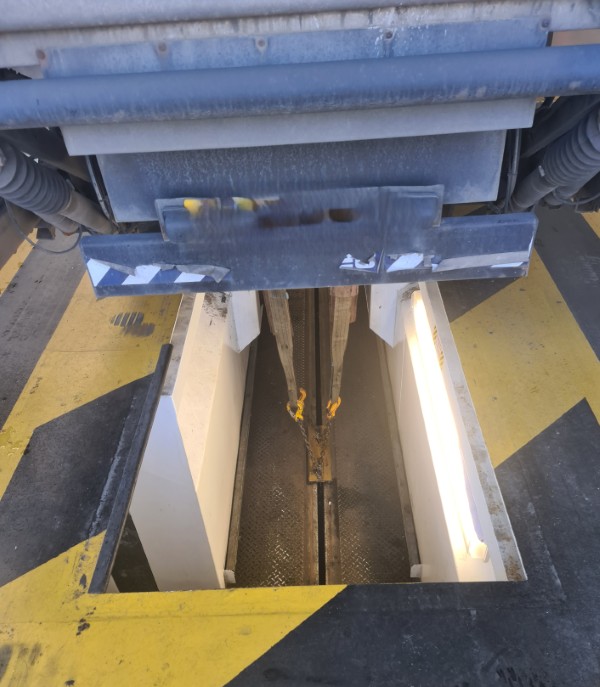 “One size does not fit all when it comes to vehicle loading, so to support both in-ground and cross-pit installations, four vehicle restraint systems have been developed for the BM18200 brake tester creating a bespoke solution for your workshop layout. Each system uses a rolling skate that moves with the vehicle, so the restraint does not need to be disconnected and reconnected during testing.
“In-ground brake testers can be fitted with a floor-mounted skate rail. Cross-pit brake testers can be fitted with side-rail or pit-floor-mounted sliding restraint rails.”
The BM18200 is controlled by embedded software rather than a simple up/down button. This allows the system to maintain the target load even if the vehicle airbags inflate or deflate during the test.
Via the BM tablet app, users have in cab control of the vehicle loading and brake test.
“The software reads the maximum axle load from the vehicle’s Department for Transport (DTP) code and uses this data to calculate the DVSA’s minimum 65 per cent load requirement. Once the DTP code is set, the BM18200 automatically applies the correct load for each axle unless the operator chooses to override it manually.
“Two important design features of the BM18200 are lift height and lifting capacity. The 255 mm lift height compensates for airbag compression during chassis loading, while the full 16-tonne lifting capability matches the brake tester’s operating capacity and supports the full range of UK heavy vehicles.
“Because the BM18200 incorporates a vehicle-lifting system, its calibration process includes additional inspection and certification requirements.
“The brake tester is subject to lifting-equipment regulations and must undergo regular inspections and certification under the Lifting Operations and Lifting Equipment Regulations (LOLER).
“All official BM agents are competent to complete the required calibration and LOLER certification. To ensure the work is carried out by an approved provider, use only the companies listed on the BM website.”
The skate rail and software-controlled chassis loading system allow the operator to attach the restraint once and manage the entire test from inside the cab, says BM, including applying and releasing the load.
“There is no need to leave the vehicle to reposition restraints for each axle or operate a console in the test lane.
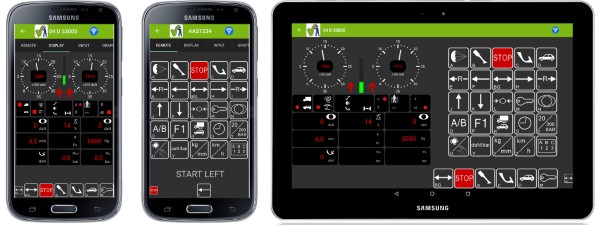 “A dedicated BM tablet app provides immediate control throughout the test. If loading needs to be stopped for any reason, the operator can abandon the process instantly from the cab.
“The app uses live controls and a guided test sequence. At each stage, it displays only the control required to complete the current instruction, making the process straightforward and helping to reduce operator error.”
If the tablet battery is flat, testing can continue from the main PC or a backup device, typically an Android phone with the free-to-download BM app installed.
If the tablet loses its connection to the brake tester during a test, both the brake rollers and the loading system stop automatically.
“The lifting and restraint systems place substantial loads on critical components, particularly at the anchor points,” BM continued.
“Each component is therefore engineered for these operating stresses and manufactured from materials with the strength required to withstand them.
“BM engineers use advanced analysis software to calculate the load and strength requirements for every critical component. This rigorous approach helps ensure that the brake tester retains its structural integrity, resists deformation, and operates safely under the expected loads.”
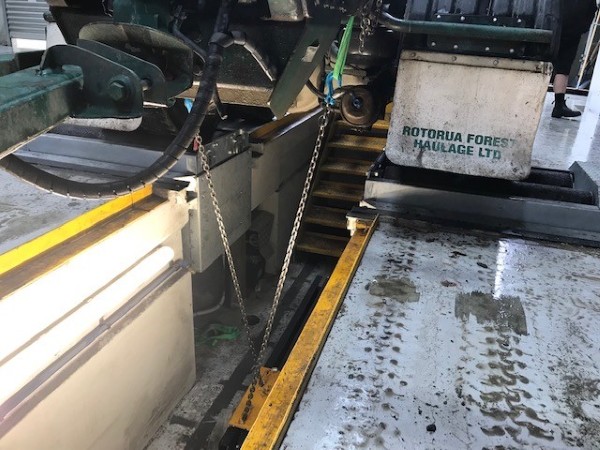 BM says its brake testers combine a compact footprint with the strength and durability required for demanding workshop use.
“Their compact dimensions allow them to fit into many existing recesses originally built for other manufacturers’ brake testers… In many cases, upgrading to a BM brake tester can be completed without extensive or costly groundwork.”
The BM18200 can be upgraded to test tachograph systems, the firm adds, enabling the workshop to create a versatile, multifunction test lane.
“All BM brake testers provide open access to calibration settings, so owners do not need access dongles, rolling passwords, or paid for unlock codes to maintain the equipment. Once purchased, the brake tester belongs fully to the owner, allowing them to choose their preferred calibration partner without being tied to a monopoly service arrangement.
“BM supports this flexibility through multiple authorised agents equipped with calibration rigs built and certified to ISO/IEC 17025 standards.”
A list of BM authorised agents can be found at the web address below.
“Only these listed companies have direct access to BM direct sales, spare parts, product training and technical data,” said BM.