
Truck makers in urgent plea to Brussels on CO2 targets
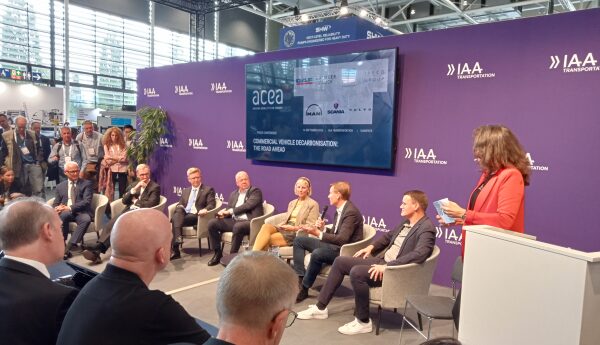
Europe’s truck manufacturer chiefs took to the stage together at IAA in Hannover to urge action by Brussels
Leading European truck makers have told the European Union that its 2030 deadline by which manufacturers have to slash the CO2 outputs of new vehicles by 43 per cent or face massive fines must be extended. With only 45 months remaining until the deadline comes into force, demand for zero-emission trucks across Europe is nowhere near where it should be, at just 2.4 per cent of total registrations, they warn.
That is not the fault of manufacturers, they say, given how much they have invested in battery-electric products. It is instead the fault of government policymakers and energy suppliers who have failed to ensure that suitable charging points and the power to run them are available.
As a consequence the 2030 deadline must now be pushed back to 2033, they insist.
Addressing a press conference at the IAA Transportation show, Karin Rådström, president and chief executive officer of Daimler Truck, said: “We are fully committed to sustainable transport. The investments have been made, and a wide range of CO2-free vehicles is available today.
“Making them commercially viable at scale however also depends on a wider ecosystem that is clearly delayed and not yet developing fast enough,” she continued.
“This means two things,” she added. “Doubling down on the enabling conditions fast, and the EU delaying the 2030 compliance timeline by three years, to prevent penalties for manufacturers.”
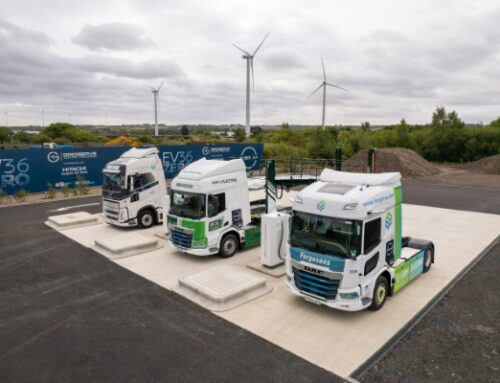
There are less than 2,000 truck recharging points across Europe, said Ms Rådström. There would have to be 20,000 to meet the 2030 target, she stated – a massive increase, and a clear illustration of the extent to which the infrastructure needs to catch up.
The chief executive officers of Europe’s seven leading truck builders were present at the event and appeared on stage to voice their concerns. They included Iveco’s Olof Persson – Iveco did not exhibit at the show.
The conference was organised by ACEA, the European automobile manufacturers’ association, and Rådström is chair of its commercial vehicle board.
As if to emphasise the extent to which manufacturers are playing their part in cutting emissions, the IAA show saw Daimler Truck, Volvo Group, Toyota, Bosch, Air Liquide, TotalEnergies, Teal Mobility and MB Energy jointly unveil their plans to accelerate the roll-out of hydrogen trucks across Europe.
They include an initiative by Daimler Truck to deploy 100 next-generation fuel cell trucks into customers’ fleets from the end of this year onwards. At the same time it is preparing hydrogen combustion trucks for launch in 2027.