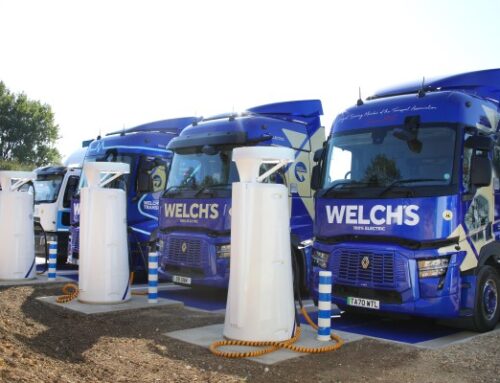

Depot Charging Scheme reopens for applications
 The government’s Depot Charging Scheme reopened today, offering fleet operators the chance to apply for a share of a £38 million tranche of funding to help tackle the upfront costs of electrification.
The scheme aims to reduce the cost burden of installing charging infrastructure for commercial vehicle operators.
It had previously been expected to reopen on 28 October, but went live on the government’s grant portal at noon today.
Funding from the scheme will cover up to 60 per cent of charge point and civil costs at depots for those operating or planning to operate electric trucks, vans and coaches, up to a maximum of £1 million across all of an operator’s sites. Works will need to be completed by 31 March 2028.
Applications will be assessed on a first come, first served basis, or competitively if the scheme is oversubscribed. Applicants are being encouraged to contact WSP, the scheme’s technical partner, if they require support and guidance on designing projects and applying.
“The scheme is looking to enable the growth of zero emission vehicles at a critical juncture for the market,” said the Department for Transport in its grant summary.
“Through the scheme we are looking to deliver targeted market intervention in a way that protects public money, whilst assessing a variety of areas including grid capacity, how chargers will be used by vehicles and how market costs are evolving over time.
“The scheme involves a series of evidence requirements and questions which inform how government can best support the market.”
Applicants must be registered and operate in the United Kingdom; the scheme is not open to fleet operators in the crown dependencies (the Isle of Man, Jersey and Guernsey). The organisation and vehicle fleet must have been operating in the UK for at least a year at the time of application, and must own or lease one or more UK depots.
A further condition is that operators must “have sufficient grid capacity on site, provide evidence of an electrification date within the project delivery window and/or share plans to upgrade power available to their chargers with additional grid supply outside of the delivery window”.
The transport minister Simon Lightwood said: “Britain’s businesses keep the country moving, and we want to help them power up for the future. Today’s funding will help firms put chargers in their depots, so more electric trucks, vans and coaches can get on the road.
“By cutting the cost of installing charge points, we’re helping businesses build cleaner fleets, reducing exposure to volatile fuel prices and driving growth up and down the country.”
Simon Smith is the CEO at Voltempo, the charging solutions provider and leader of the eFreight 2030 consortium, part of the government-funded zero-emissions HGV and infrastructure demonstrator programme. He also welcomed the continued investment in depot charging for commercial fleets.
“It recognises the vital role logistics plays in the UK economy and the need to make the move to electric more affordable,” he said.
“At Voltempo, we’ve already helped several operators install charging infrastructure from previous DCS rounds. But getting chargers in the ground is only half the story. Energy costs, grid connections and making better use of that infrastructure are critical to getting the economics right.
“By bringing fleet demand together, we can secure cheaper, more predictable energy and help operators earn revenue from charging capacity that would otherwise sit unused.
“Electric freight has to pay. Charging is at the heart of that equation. Get the economics right and fleet electrification becomes a commercial opportunity.”
Toby Poston, chief executive of the British Vehicle Rental & Leasing Association (BVRLA), said: “The Depot Charging Scheme is providing valuable support to fleet operators looking to invest in electric vehicles. Access to affordable, reliable charging infrastructure remains a significant challenge, particularly for rental businesses and smaller operators where upfront costs can be a barrier.
“The confirmation of further funding, alongside defined application phases and timelines, is welcome. Businesses need clarity to plan investment and make informed decisions about when and how to electrify their fleets. This is practical, targeted support that can help more operators make the transition with confidence.”
Aymeric Larcher, managing director of Renault Trucks UK & Ireland, said: “We very much welcome the government’s continued support for depot charging infrastructure. Installing the charging facilities needed to operate electric trucks represents a substantial investment, and for many operators, it’s one of the main barriers to making the switch.
“With more than 3,500 Renault Trucks electric vehicles having collectively covered over 130 million kilometres in real world conditions, electric trucks are already proving themselves across a wide range of operations. But having the right charging infrastructure in place is as important as the right vehicle.
“This funding will help more businesses invest in the depot charging facilities they need, whether introducing electric trucks and vans for the first time or expanding their existing fleets. It’s a positive signal to the industry and an important step in making electric trucks a more accessible commercial choice.”
Rhian Burrell, managing director at contract hire specialist Vertellus, said: “The government’s continued funding for depot charging is welcome news and will help reduce the upfront investment required, making it easier for businesses to take the next step towards electric trucks and vans.
“Through our EV Discovery Programme, we’re already helping operators understand how electric trucks can work within their fleets. This additional support will help businesses build on this experience, with the charging infrastructure needed to support their operations.”
The scheme is open for applications until 26 February, and the Department for Transport expects that future application windows will take place for the 2028-29 and 2029-30 financial years.
Full details can be found at the government’s grant portal.