
What’s next for DVS?
 Emily Hardy of Brigade Electronics looks to the future of London’s Direct Vision Standard
The enforcement of Transport for London’s (TfL) Direct Vision Standard (DVS) is well underway, with goods vehicles over 12 tonnes now requiring a permit to drive into Greater London – and it is now less than a year before consultation opens for the new ‘Progressive Safe System’.
For operators looking to buy new vehicles, trying to anticipate requirements is a game of probabilities. Meanwhile truck manufacturers are torn between making substantial changes to cab designs to increase a vehicle’s star rating or incorporating electronic devices to meet Safe System requirements. The burning question is what will be included in the new standard.
DVS was developed to protect vulnerable road users such as cyclists and pedestrians and is based on a ‘star rating’ system, with ratings issued based on how much a driver can see from the cab.
HGVs that do not meet the minimum requirement of one star needed to comply, require the addition of a Safe System which involves the installation of extra devices for indirect vision (similar to FORS and CLOCS specifications).
Complying with the Safe System requirements will not alter the vehicle’s star rating but will permit drivers to travel into Greater London.
 The Safe System is set to undergo changes in the coming years, and Brigade anticipates that vehicles will need enhanced camera monitor systems, and detection systems with greater coverage.
TfL says DVS will be key to eliminating death and serious injuries in the capital and its data shows that HGVs are disproportionately involved in fatal collisions.
Between 2018 and 2020, HGVs were involved in 41 per cent of collisions where people cycling were killed, and 19 per cent of collisions where a pedestrian was killed.
The consequences of failing to comply with DVS are stark. If drivers have not received confirmation of their permit, their vehicle will not be recognised by the Automatic Number Plate recognition cameras – and a penalty charge notice will be issued.
Consultation for the DVS Progressive Safe System opens next year, and the legislation will come into force in 2024. The DVS minimum star requirement for gaining a permit to drive in London will rise to three stars and vehicles that fall short can fit a Progressive Safe System.
All operators who currently have the Safe System due to low star ratings will need to upgrade to the Progressive Safe System on 25 October 2024.
The Progressive Safe System will take into account new technology, but the specifications have not been released and many operators who are keen to futureproof their vehicles are asking what will be required.
T here are various possibilities of what the Progressive Safe System could entail:
- No new technology deemed necessary – Due to Covid, Brexit and all the issues experienced in 2020/21, TfL could decide that the scheme does not need and/or cannot sustain any additional equipment.
- FORS Silver – Operators could look at bringing their vehicles in line with FORS Silver requirements, which is a slightly higher spec, to include a rear camera and a reversing alarm.
- Digital recording – FORS has pushed for recording previously for insurance purposes and to record near misses. Event data recorders (black box) will be required by the General Safety regulation but not until 2026 for new models and 2029 for new vehicle registrations.
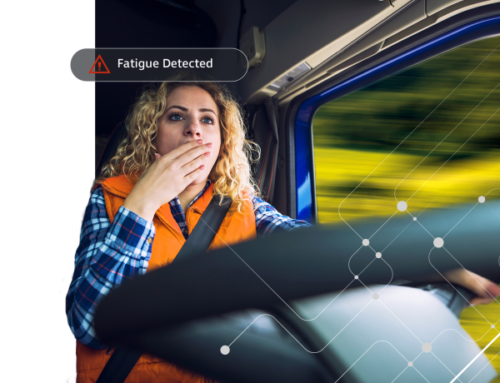
- It could match the requirements of the European Commission’s General Safety Regulation, which will include technologies such as intelligent speed assist, alcolock, driver drowsiness and attention, and reversing detection.
The DVS spec uses the terminology ‘shall, should, and may’ to determine whether something is mandatory, recommended, or an emerging best practice. There are some indications in the current spec of practices that TfL might like to see move from a ‘may’ to mandatory.
This includes sensor systems being activated all the time. Previous systems on the market have been designed for low speed manoeuvring, mainly turning left.
 Having the systems activated all the time would cause driver overload and desensitisation.
However, new technology will solve this issue and the development team at Brigade have been working hard to create innovative technologies.
Brigade, which has been at the forefront of the vehicle safety market since 1976 when it introduced the reversing alarm into the UK, has created a handy web page with easy-to-follow instructions on applying for a DVS permit and can assist customers to obtain their star rating.