
CNG Fuels: the role of biomethane in cutting emissions
 Renewable fuels supplier CNG Fuels, part of the ReFuels group, has emphasised the role biomethane can play for transport fleets on the road to decarbonisation.
“Battery-electric solutions remain limited for long-haul use, with constraints around range, payload and infrastructure,” said Philip Fjeld, CEO of ReFuels.
“Hydrogen is still far away from commercialisation. That leaves operators looking for solutions that can deliver immediate emissions reductions without disrupting operations.
“Increasingly, that solution is renewable biomethane (Bio-CNG), a clean fuel derived from organic waste such as food, sewage and manure. Bio-CNG is already being deployed at scale in the UK, supported by a growing national refuelling network.
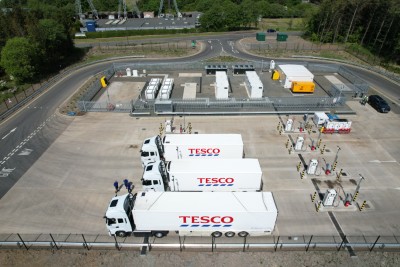
“Today, CNG Fuels has 16 high-capacity public access stations across the UK, complemented by mobile refuelling units, with further stations under development. Refuelling is safe, clean and relatively quick, typically taking around eight minutes.”
Bio-CNG is a fuel that works economically, the firm contends.
“Compared to diesel – and particularly HVO – it offers materially lower fuel costs, with payback on vehicle investment often achieved within 12 to 18 months. For fleet operators, the combination of lower emissions and lower running cost is difficult to ignore.
“This is already translating into mass adoption. We currently have more than 2,200 HGVs using our station network, including 8 of the UK’s 10 largest supermarket chains. Even in a softer UK truck market, gas-powered HGVs are gaining share and more than 10 per cent of the 4x2s run on biomethane.
“The introduction of new 6×2 trucks from Scania and Iveco is further accelerating this shift by opening up a significantly larger portion of the replacement market. There is currently a 12-month waiting list of more than 100 fleets to demo the 6×2 Scania demonstration vehicles being brought to the UK.”
Since biomethane is produced from domestic and European waste feedstocks and distributed through existing gas infrastructure, says Philip Fjeld, it can also offer greater resilience in the context of recent geopolitical events, and supply diversification.
“The supply outlook is also strengthening,” he said.
“Across Europe, more than €30 billion is being invested into new biomethane production capacity towards 2030, supported by substantial untapped feedstock potential.
“The emissions impact is tangible. Biomethane can deliver lifecycle CO₂ reductions of up to 90 per cent compared to diesel, and cumulative savings in the UK are already approaching 1 million tonnes of CO₂ since CNG Fuels was established in 2014.
“By end-2028 we are targeting a national refuelling network capable of supporting 20,000 HGVs. At full capacity this could enable emissions reductions of up to 2 million tonnes of CO₂ annually, equivalent to removing around one million passenger cars from the road each year.”