
Setting and forgetting with Falken
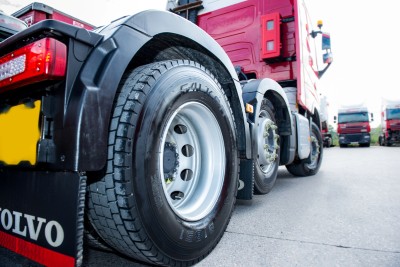 Tyre specialist Falken has outlined some of the key products and features of its commercial vehicle tyre portfolio, which it says is designed to provide tailored options for specific operating contexts.
“With everything involved in service delivery, tyres need to be dependable,” said Falken.
“It should be a case of ‘set and forget’. You need equipment that understands the assignment, whether that involves a steady trunking run down the M6 or extracting a fully laden tipper from a muddy development site in the driving rain.
“Rather than offering generic rubber that does merely an average job everywhere, Falken engineers its portfolio to provide distinct options for specific environments, letting you choose the right tyre for the application, then stop worrying about it.
“When the bulk of your work revolves around regional transport and intercity routes, predictability is everything. Steer and drive axles face entirely different physical forces and they require dedicated tread patterns to maximise their lifespan.
“Falken caters to this reality by dividing its offering into carefully planned categories such as the RI line for strong steering, handling and directional control and the BI line for heavy traction.”
The RI 151 utilises continuous rib patterns on the steer axle and trailer with wide shoulder ribs to maintain road stability and promote incredibly even wear, says Falken.
“Transport managers pair these with the BI 856 on the drive axle, which uses hexagonal tread blocks and 3D Miura-Ori sipes to ensure that vehicles can pull away cleanly and safely.
“Across an entire fleet, the correct selections can make for a significant uplift. For instance, a major UK regional haulage fleet operating 100 HGVs recently saw downtime reduced by 30 per cent after switching to Falken’s BI 856 and RI 151 tyres alongside a proactive maintenance programme.”
The brand uses its 4D Nano Design technology to ensure the RI 151 compound remains pliable and grips the road firmly regardless of the season, while the Three-Peak Mountain Snowflake certification indicates that the tyre is safe and reliable for driving in snow.
For trailers and low loaders, the RI 128 adds micro sipes in the groove walls to manage stiffness and increase cut resistance.
“Not every fleet enjoys the luxury of smooth tarmac,” continued Falken.
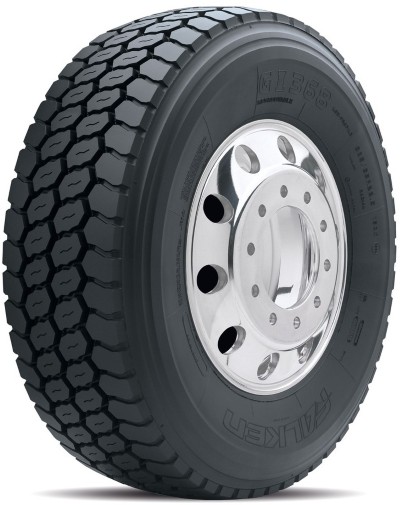 “Many operators shuttle constantly between congested urban streets and punishing construction sites. Mixed service environments chew through standard rubber with alarming speed and they require a fundamentally different approach to tyre construction. For these highly demanding applications, you need extreme durability and uncompromising damage resistance.
“Tyres designed for this specific sector, like the GI 368 for steer and trailer applications, feature reinforced shoulders and specially adapted high-strength steel belts to improve puncture resistance.
“For trailers with off-road requirements, the GI 388 features open tread patterns with smartly angled grooves that clear mud and debris automatically as the wheel turns. Crucially, they incorporate built-in stone ejectors and cut-resistant compounds to stop sharp rocks from drilling into and ruining the premium Japanese-made casing.
“When you run specialised heavy-duty vehicles, you might even rely on wide-base tyres like the GI 378. These are offered exclusively in widths ranging from 385mm to 445mm with 20-ply ratings designed expressly to spread the payload safely across fewer hubs.”