
BPW issues brake testing compliance tips
 BPW has provided advice for fleet operators on how to ensure compliance with brake testing requirements.
“With brake testing now firmly embedded as a core compliance requirement rather than best practice, operators are under increasing pressure to demonstrate robust, evidence-based maintenance practices,” said BPW.
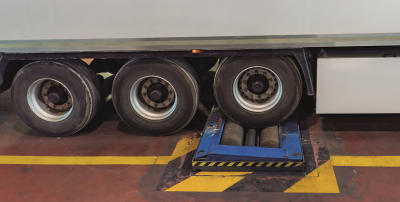
“Since updates to the Driver and Vehicle Standards Agency (DVSA) Guide to Maintaining Roadworthiness, brake performance assessments are expected at every PMI, with laden roller brake testing (RBT) now standard.”
DVSA also expects a documented risk assessment where laden testing is not carried out, adds BPW.
“If the service brake fails, start with the fundamentals,” said the company.
This would include assessing the wear and condition of brake friction material, checking drums and discs for contamination or damage, inspecting mechanical components such as camshafts and caliper guide pins, and ensuring correct brake setup against the vehicle’s brake calculation data.
“It’s also essential to confirm the DTp (Department for Transport braking reference number) is correct. If this is wrong, the entire test result may be invalid,” advised BPW.
For parking brake failures, it advises carrying out the same checks, and additionally inspecting brake chamber springs for weaknesses and breakages, and ensuring that the chamber specification for the vehicle is correct.
Exemptions from laden brake testing are narrow and must be justified, says BPW.
“Even where exemptions apply, operators must document their reasoning and ensure an alternative brake performance assessment is completed, alongside documented risk assessments covering the reasoning and alternative assessments.”
While testing at every PMI (as per the current DVSA Guide to Maintaining Roadworthiness) is widely referenced, says BPW, regulators increasingly focus on whether an operator’s regime is effective for its operation, not just compliant on paper.
“High-utilisation fleets or demanding duty cycles may require more frequent testing,” it said.
The firm also emphasised the importance of documentation and audit trails.
“Operators must retain brake test printouts, EBPMS reports where used, [and] signed evaluations by a competent person. Failure to evidence compliance is as serious as failing the test itself.”
An Electronic Brake Performance Monitoring System (EBPMS) can be used as an alternative to roller brake testing, adds BPW, provided that data is reviewed before each inspection, reports are interpreted by a competent person, and records are retained for audit.
“However, a laden RBT is still required at the annual MOT and may still be expected where risk dictates.”
With brake testing now a compliance cornerstone, the direction of travel is clear, says BPW.
“Brake testing has moved beyond periodic checks to a continuous, evidence-led process, embedded within fleet maintenance.”
“For operators, that means treating laden brake testing as the default, not the exception; aligning inspection schedules with real-world vehicle usage; [and] ensuring robust documentation and competent sign-off.
“Or, put simply: if you can’t prove your brakes perform under load, you can’t prove your vehicle is roadworthy.”