
Fischer Panda UK: addressing shifting demands on auxiliary power

Ian Saunders of Fischer Panda UK | Power Solutions
Fischer Panda UK | Power Solutions has highlighted the challenges posed by the increasing electrical demands placed on vehicles by an array of auxiliary functions and equipment.
“When people talk about fleet electrification, attention usually goes to the drivetrain,” said sales director Ian Saunders.
“In practice, operators are increasingly dealing with a different challenge: powering everything the vehicle carries.
“Whether a vehicle is electric, hybrid or diesel-powered, it still has to support the equipment that keeps operations moving. Emergency lighting, refrigeration, CCTV, communications, welfare equipment, climate control, battery chargers and 230 V tools all add to the electrical load, while 12 V and 24 V systems continue powering essential vehicle functions in the background.
“The result is that auxiliary power has become a much bigger part of vehicle specification.”
Every application has a different load profile, Ian explains: “A highway maintenance vehicle has different requirements from a refrigerated van, while a command vehicle places very different demands on its electrical system than a utility engineer’s service vehicle. The best solution starts with understanding the vehicle’s duty cycle, not simply increasing battery capacity or generating output.
“As electrical demands increase, power management becomes less about individual components and more about how the complete system works together.
“Generation, storage, charging and power distribution all need to work as one architecture. Done properly, energy is used more efficiently across multiple onboard loads, charging can be managed around smart alternators and modern battery technologies, wiring complexity is reduced and operators gain a system that’s easier to monitor, maintain and expand as requirements change.
“That’s particularly important as fleets continue introducing new electrical equipment throughout a vehicle’s service life.”
One area becoming increasingly relevant, says Ian, is the balance between permanently installed auxiliary power and portable power.
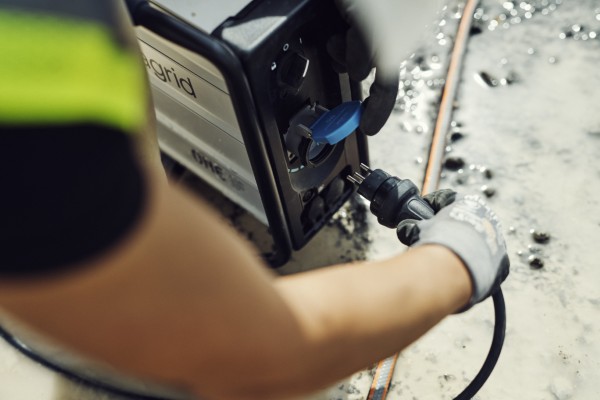 “Not every application justifies another fixed installation. Maintenance crews working away from depot, roadside repair teams and engineers using battery-powered tools often need reliable AC power exactly where the work is happening, without idling the vehicle or relying on long extension leads.
“Portable battery power has opened another option. Rather than replacing onboard systems, solutions such as Instagrid complement them by providing clean 230 V power wherever it’s needed. It allows power to move with the job, supporting tools, testing equipment and temporary site work while reducing unnecessary engine running.”
Payload matters more than ever, adds Ian, and so do weight, available installation space, charging strategy and uptime.
“As commercial vehicles become more electrically capable, the supporting electrical systems need to become more carefully engineered, ensuring auxiliary power adds capability without creating unnecessary compromises elsewhere in the vehicle.
“The most effective solutions rarely come from specifying the biggest battery or the highest-output inverter. They come from understanding how energy moves through the vehicle over a full working day and designing the electrical system around that operational reality.
“Fleet electrification is changing more than the way vehicles are driven. It’s changing how vehicles are specified, integrated and powered throughout their service life.”
Fischer Panda UK | Power Solutions offers power management systems for a variety of vehicle applications, load profiles and operational requirements, from integrated systems to portable power.
Its Mastervolt offering provides bespoke, lightweight and integrated power systems for demanding applications, combining batteries, inverters, chargers and monitoring to manage critical electrical loads such as refrigeration and specialist equipment.
Meanwhile, solutions from Clayton Power are said to simplify onboard power by combining battery storage, inverter and charger technology in one compact system, with charging from the vehicle, mains or solar.
For mobile applications, Instagrid One delivers lightweight, portable 230 V AC power in a compact 20 kg unit that can be carried in one hand, so power can be taken directly to where it is needed.