
Pailton: engineering an end to MSK injuries in the bus cabin
 Steering systems manufacturer Pailton Engineering has outlined how it is helping to tackle a shortage of bus and coach drivers by homing in on one of the biggest causes of driver absence in the UK: musculoskeletal (MSK) problems.
The company cites a Transport for London (TfL) quarterly report released last year which saw almost 20,000 sick days recorded in three months due to MSK injuries.
“We set out to demonstrate to bus manufacturers that simple ergonomic improvements to the seat-column interface would help mitigate these issues by making the driver cabin more comfortable for any driver, no matter their height or body type,” explained Michael Whitehouse, design and development engineer at Pailton Engineering.
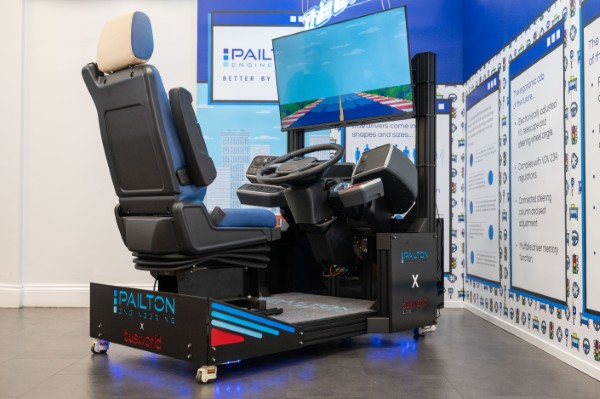
“We thought a showpiece at one of the industry’s biggest trade shows, Busworld 2025, would be the way to go. The idea began as a life-size bus driving simulator that would show what day-to-day life for the drivers was like.
“At the same time, I was heavily involved in developing our new fully electric tilting head steering column, which we wanted to debut at the show. The electric steering column has been redesigned from the ground up to make it more compact and robust.
“The new column enables both tilt and telescopic adjustment and features our unique tilting head mechanism, which makes it the only product of its kind offering this level of adjustability. The new column fits seamlessly into existing cabins, with ±55mm telescopic movement and ±7.5° of tilt movement.
“Being fully electric, it also uses an electric clamp rather than the pneumatic clamps of previous models, so no longer requires a compressed air supply. The electric clamp uses a linear actuator controlled by the CAN bus system to generate a clamping force exceeding 1200N.”
Eventually, Michael says, the team had the idea of combining the new column and the simulator. But rather than using a visual simulator to show the industry what their drivers see, they decided to create something that demonstrates what drivers feel – a bus driver workstation, complete with dashboard, that people could sit in.
“The goal was to create a robust, industrial-looking frame that could replicate a bus cab without the rest of the vehicle. We chose aluminium extrusion for its strength and clean finish, and the frame design evolved through several iterations to ensure stability for transport and display. We’d use third-party dashboard plastics to demonstrate how the column could integrate with any dashboard.
“Once the layout was agreed, fitting the electric steering column was straightforward, and the team experimented with seat positioning and flooring options before locking down the final concept. Although Pailton Engineering has its own coating facilities, we opted for a specialist powder coat to achieve the premium finish required for a high-profile showpiece.
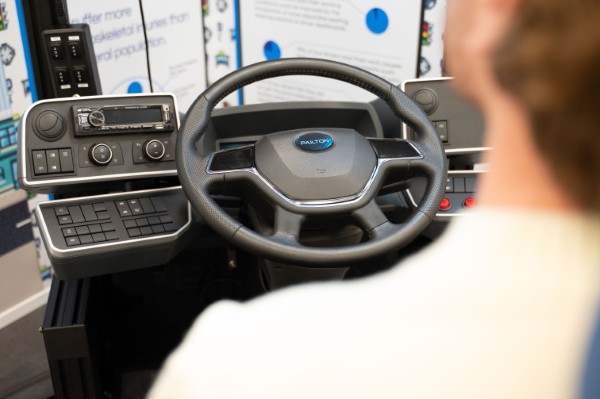 “It wasn’t all plain sailing though, a late dashboard change meant redesigning brackets at speed, but the team delivered a fully functional pod in time for Busworld, complete with integrated electronics to synchronise seat and column movement.”
Once the pod was built, the real test was whether drivers of all shapes and sizes could get comfortable, Michael explains.
“At the office, we only had our extremes – one team member at 6’7” and another at 5’2” – so we started there. If they could both find a good position, we knew the concept worked.
“Successful testing gave us confidence to display the pod at Busworld 2025, where it proved its worth. Every visitor was able to find a comfortable sitting position within a couple of minutes. For those who saved their settings, the electronic memory function recalled their preferred position within eight seconds when they returned.”
The ergonomics project has been years in the making. Pailton unveiled the first prototype of the electric column at Busworld 2019 and used that industry feedback to improve the design, and again at Busworld 2023.
“Hopefully, our driver pod showed manufacturers and operators that simple changes can lead to better ergonomics and that it’s possible to decrease total cost of ownership by reducing MSK-related sick leave,” said Michael.
“In the future, we’d like to see seats automatically adjusting to the driver’s position, perhaps using an online rota to identify the next driver or a keycard. Who knows? Maybe one day a visual scan of the driver’s figure will enable the workstation to predict the most comfortable position before they even sit down.”