
BLT Driver Training: reducing fleet risk through ongoing education
 BLT Driver Training has emphasised the importance of the continuation of driver training after induction, and explained how practical assessment, alongside online learning, can help reinforce safer driving habits over time.
The training provider points out that a driver may have years of experience, hold the appropriate licence and complete all required induction training, but that does not mean their driving habits remain unchanged over time. Visibility is a fundamental part of commercial vehicle safety, the firm adds, but effective observation involves more than simply being able to see the road ahead.
“For drivers operating light commercial vehicles (LCVs), limited rear visibility, vehicle dimensions, blind spots and changing traffic conditions can create additional challenges, particularly when manoeuvring in built-up areas or sharing the road with pedestrians and cyclists,” said BLT.
“Even experienced drivers can develop habits that affect their awareness, whether that involves relying too heavily on vehicle technology, overlooking mirror checks or becoming less attentive to developing hazards on familiar routes.
“Modern driver-assistance systems can provide valuable support, but they cannot replace sound judgement, effective observation and the ability to anticipate risk. This is where ongoing driver education plays an important role.
“Revisiting fundamental skills such as hazard perception, speed management, positioning and spatial awareness can help drivers recognise situations before they develop into incidents. Rather than treating road safety as knowledge acquired once and retained indefinitely, operators should consider how that knowledge is maintained and applied in everyday driving.”
Induction training provides an essential foundation, says BLT, introducing drivers to company policies, vehicle requirements and expectations around safe working practices.
“However, it represents a starting point rather than the completion of a driver’s professional development. For fleet operators, understanding each driver’s competence, capabilities and individual training needs is an important part of managing occupational road risk. This includes recognising when additional training or refresher sessions may be beneficial, particularly as driving responsibilities and working environments change.
“Importantly, not every driver presents the same level of risk. Experience, vehicle familiarity, annual mileage, working environments and previous incidents can all influence the type of support an individual may require. A driver moving from a smaller vehicle into a 3.5-tonne van, for example, may need additional guidance on vehicle dimensions, braking distances, load security and manoeuvring. Another driver may be highly experienced but benefit from refreshed knowledge of changing road layouts, speed limits or the risks associated with distraction.
“A more effective approach is to identify individual needs and provide relevant interventions, rather than relying solely on a standardised training programme.”
Practical driving assessments offer fleet managers an opportunity to understand how drivers perform in real-world conditions, says the company.
“Unlike a written knowledge check, an on-road assessment allows a qualified trainer to observe behaviour directly, including hazard awareness, vehicle control, observation, anticipation and decision-making. It can identify areas where confidence, knowledge or technique may need improvement, while also recognising positive driving behaviours. For fleet operators, practical assessments help identify areas where additional training may be beneficial.
“By recognising potential risks early, organisations can take a more proactive approach to fleet safety, rather than waiting for an incident to highlight areas for improvement. They can also help make conversations about driving standards more constructive. When positioned as an opportunity for professional development rather than a test or disciplinary measure, assessments can encourage drivers to engage with feedback and take greater ownership of their performance.
“For LCV operators in particular, practical coaching can address the everyday challenges associated with larger vehicles, including reversing, blind spots, safe loading and maintaining appropriate distances from other road users.”
While practical assessments provide valuable insight into driving behaviour, maintaining safe standards also requires regular opportunities to revisit essential knowledge, the firm contends.
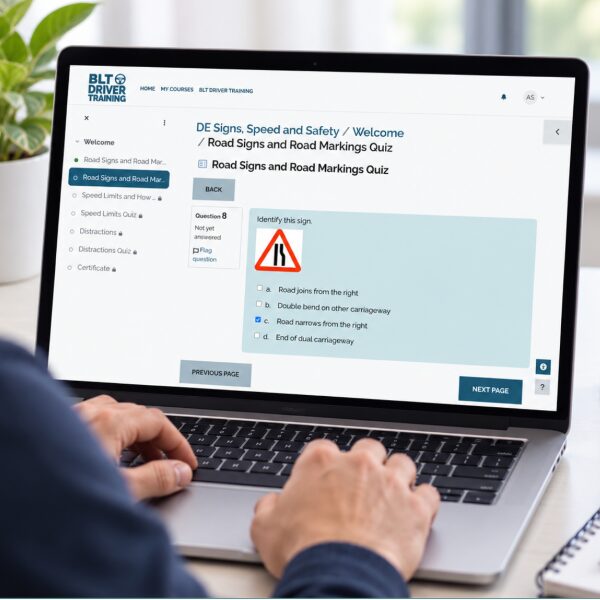
“This is where eLearning can complement on-road training. Short, focused online modules allow drivers to refresh their understanding of important road safety topics without requiring extended periods away from operational duties. Subjects such as speed limits, road signs, road markings and driver distraction are relevant to everyday journeys, yet familiarity can lead to complacency.
“For organisations managing drivers across multiple locations, digital learning can provide a consistent way to communicate essential information and reinforce safety expectations. It can also support targeted development. Where an assessment identifies a gap in knowledge, a relevant eLearning module can help address that area, with practical coaching used where changes in driving technique are required.
“However, online learning should not be viewed as a replacement for practical training. Understanding a principle and consistently applying it behind the wheel are two different things. The greatest value comes from combining approaches: using assessments to identify needs, practical training to develop skills, and eLearning to reinforce knowledge over time.”