
Netradyne: your insurer wants data, not promises
 Operators who can prove their drivers are getting safer will pay less for their fleet insurance, according to fleet management platform Netradyne.
“A few years ago, a fleet’s insurance renewal was mostly about the claim’s history. You showed last year’s losses, talked about your training policy, and promised things would be better. The insurer took you at your word,” said Jeremy Coleman, Netradyne associated director of sales for UK and Ireland.
“That conversation is disappearing. In the renewal meetings, underwriters are asking a different question: ‘Show me how your drivers actually behave. Show me what changed. Show me the trend.’”
According to Jeremy, underwriters are looking for three things: a clear picture of how drivers behave across all their driving, not just the moments before a crash; a trend that shows risk going down over time; and the ability to prove what happened when something does go wrong.
“That third point matters more than many operators realise.”
He cites Teletrac Navman’s 2026 Risk and Exoneration survey of fleets, which found that 53 per cent of those reporting accidents had cleared a driver using telematics and video data. A third said they had been hit by fraudulent motor claims, and 65 per cent had recorded premium decreases after putting safety technology in place.
“Every claim you successfully defend protects your claims history. That history is what you bring to the next renewal.”
Jeremy highlights the example of the Canal & River Trust, the charity that looks after more than 2,000 miles of waterways across England and Wales. It runs around 500 vehicles, including vans and 4x4s, driven by up to 1,500 staff. Most of them are not professional drivers.
“The Trust already had telematics, but it only showed where vehicles were; it couldn’t show how they were being driven,” explained Jeremy.
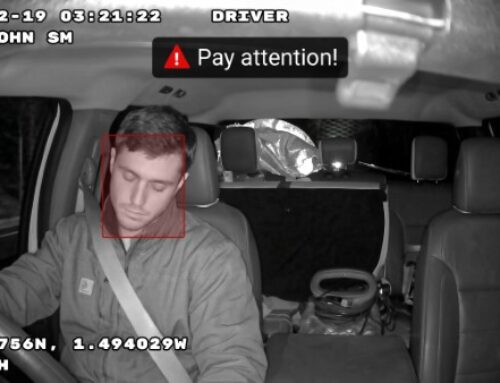
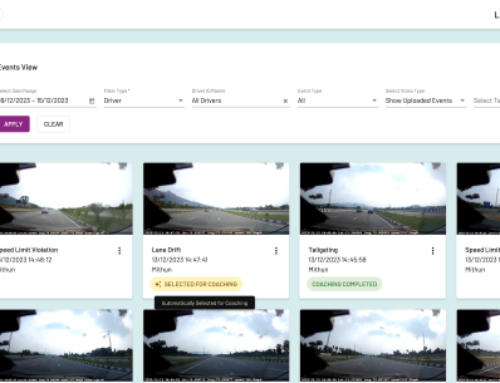
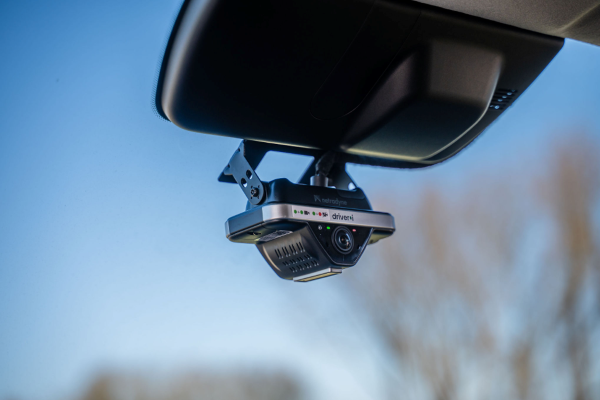
“So, it introduced Netradyne’s AI video telematics, with in-cab alerts and coaching based on all drive time.
“Between April and December 2025, the results were clear. Speeding events fell by 28.6 per cent. Severe alerts dropped by 23.1 per cent.”
In addition, the fleet’s overall driver score, based on Netradyne’s real-time driver performance metric ranging from 1 to 1,000, rose by 50 points.
“Our motor vehicle insurance was, I suppose, technically uninsurable until a few years ago,” said Steve Mulvaney, fleet manager at the Canal & River Trust.
“The work that we’ve done, implementing the camera systems, the driver risk management and doing all of these pieces together, has allowed us to actually start to save money on insurance premiums.”
The footage also protected drivers, says Jeremy: “In one head-on collision, a third party claimed the Trust’s driver had crossed into the wrong lane. The video showed the opposite. In a separate rollover, footage showed another vehicle had struck the Trust’s vehicle first.
“The insurer took notice. Over three years, the Trust has saved over €200,000 in premiums, exceeding the annual cost of the system.”
Prior to a fleet’s next insurance renewal, Jeremy recommends selecting and immediately gathering data on a few clear measures that are easy to track and explain, such as speeding, harsh braking and distraction; and to support drivers to change their habits through coaching, not punishment. Operators should know how quickly footage can be pulled as evidence after an incident, he adds, and should talk to brokers early, sharing data prior to, rather than during, renewal.
“The fleets that will pay less in the years ahead won’t be the ones with the best promises; they’ll be the ones with the best evidence,” he concluded.