
Raising the standard for brake testing with Codi
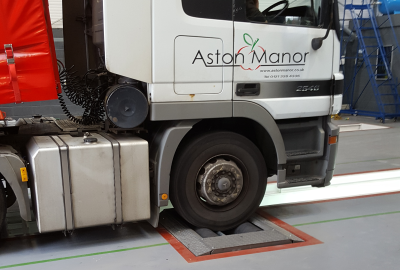 Brake testing standards may be rising, but the enforcement picture remains unforgiving, according to equipment provider Codi International.
“The DVSA and the Office of the Traffic Commissioner continue to highlight brakes as a major contributor to MOT failures and roadside prohibitions – often because marginal performance goes unnoticed until a vehicle is tested properly,” said the company.
“A roller brake tester is a significant purchase, but bringing testing in-house can protect uptime and reduce the hidden costs of outsourcing – travel, waiting, re-tests and the knock-on effect of vehicles sitting off-road. The maths is straightforward: for a 20-vehicle fleet testing quarterly, payback can fall inside five years, with the option to test third-party vehicles improving the return further. Just as importantly, ready access to a meaningful test helps fleets spot weak performance before it becomes an MOT failure – or a roadside prohibition.”
The firm continued: “The other advantage is diagnostic. A roller brake tester does more than produce a pass/fail-style printout: it can expose developing faults early – imbalance, binding, time lag and weak axle performance – so issues can be fixed before they generate heat, wear and downtime on the road.
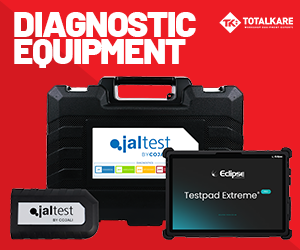
“Usability matters, because compliance lives and dies on consistency. Most modern brake testers are computer-controlled and run against the DVSA database, producing standardised results that can be stored with the vehicle file. For busy workshops, the best systems are the ones technicians will actually use: fast set-up, clear prompts and simple reporting. Display position is part of that equation too – whether via multiple screens, a single large monitor or a wireless in-cab tablet – so results can be seen and verified as the test runs.”
Support can be just as important as specification, adds Codi.
“Vehicle mix, bay layout and operating pattern all affect which machine is appropriate – buses, trailers and specialist chassis can introduce practical challenges around positioning and test parameters. And once installed, brake testers are precision equipment: calibration, software updates, training and planned maintenance need to be in place to keep results credible. Many systems are supported through manufacturer-approved agents, with controlled access to software and databases.”
Codi International supplies roller brake testers for trucks and buses, including equipment manufactured in Germany by AHS Prüftechnik GmbH and Saxon Prüftechnik GmbH.
Options range from manual units to systems specified for ATF test-lane use. The portfolio also includes specialist solutions for cranes, heavy plant and military vehicles, plus mobile units for sites where a fixed installation is impractical.
Units are based around a heavy-duty roller bed with high-torque motors and durable epoxy-coated rollers. Accessories can include axle weighing, roller locking and in-cab tablet display. Systems can also be linked to a PC running the DVSA database to support compliant testing and reporting.